- Postcode districts
- WF1, WF2, WF4, WF5, WF8, WF10 + 1 more
- Nearby
- Lofthouse, Ossett and Dewsbury
- Guide price
- £850–£2,300
- Typical time on site
- 1–2 working days
- Water
- Soft across most of West Yorkshire
- Survey
- Free, at your home
What does a replacement bath cost in Wakefield?
Guide price in Wakefield: £850–£2,300 including VAT, depending on the room and what you choose. We adjust the national guide for Yorkshire and the Humber, where prices are typically about 7% below the UK average. The figure depends on the size of the room, whether anything moves, and the products you pick.
Like-for-like bath
- Silicone and tile repairs
Shower bath
- P or L-shaped shower bath
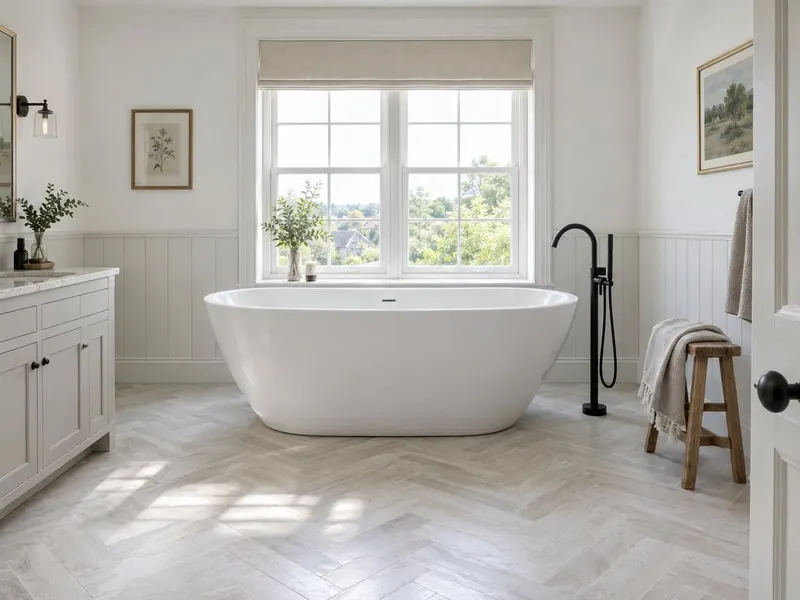
Freestanding bath
- Floor or wall-mounted filler
Guide prices for Wakefield including VAT. Your itemised written quote after the free survey is the price that counts.
Working in Wakefield
We work right across Wakefield — WF1, WF2, WF4 and 4 more postcode districts — and in neighbouring Lofthouse and Ossett.
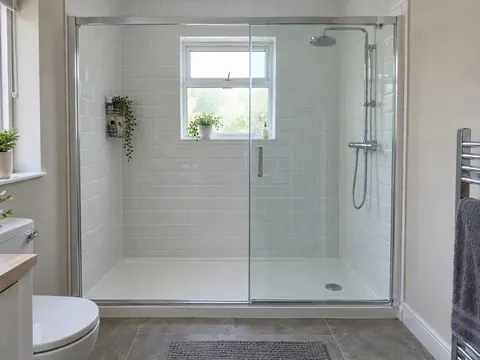
In a city the size of Wakefield, parking and access for a skip are worth sorting before the start date — we will ask at the survey. If you are in Wakefield and considering a freestanding bath, the survey includes a check of the floor and joists before you choose. For Wakefield homes with a shower over the bath, a shower bath and fixed screen keeps the floor drier than a curtain.
Most of West Yorkshire is supplied with soft water. In soft water, taps, wastes and toilet pans scale up slowly, so brushed and matt finishes are a safe choice. Hardness varies street by street, so check the figure for your postcode with your water supplier.
What the job includes
- A survey of the bath opening, the floor, the waste route, the supplies and the tiles around the bath
- Tile repairs or re-tiling around the bath, and a fixed screen where there is a shower over it
- Filling the bath before sealing, so the silicone cures with the bath at its heaviest
- Removal of the old bath, including breaking up a cast-iron bath in place where it will not come out whole
Decisions to make first
Acrylic or steel
Acrylic is warm to the touch, light and the usual choice; thicker, reinforced acrylic flexes less. Enamelled steel is rigid and hard-wearing but feels colder, and needs sound-deadening pads to stop it drumming.
Freestanding bath
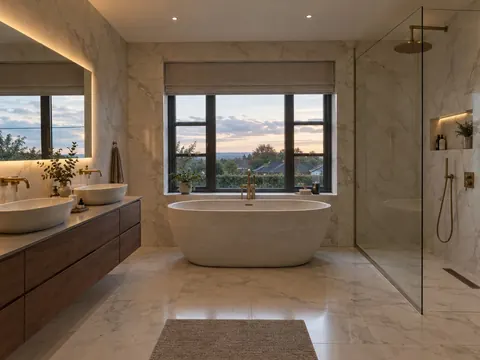
Acrylic freestanding baths are manageable on most floors; stone resin and cast iron are much heavier when full. You need room to clean round the bath and a plan for where the waste and filler come up.
Rules that apply in England
In England, Part G limits the hot water to a new bath to 48 °C at the outlet, usually with a thermostatic mixing valve, but only in a new dwelling or one created by a change of use. It does not apply to a replacement bath in an existing home, though a thermostatic valve is still sensible where children or older people bathe. New wiring for a shower over the bath or new lights is notifiable under Part P.