Free home survey & written quote · Fitted bathrooms across England, Wales, Scotland & Northern Ireland0800 088 6341
Fitted Bathrooms
Bathrooms & en-suites

Accessible bathrooms and level-access showers

An accessible bathroom is one adapted so that someone with limited mobility can use it safely, and often independently. It usually means a level-access or low-threshold shower in place of the bath, a fold-down seat, grab rails, a comfort-height WC and a slip-resistant floor.

From £6,000 inc VAT5–10 working daysFree home survey
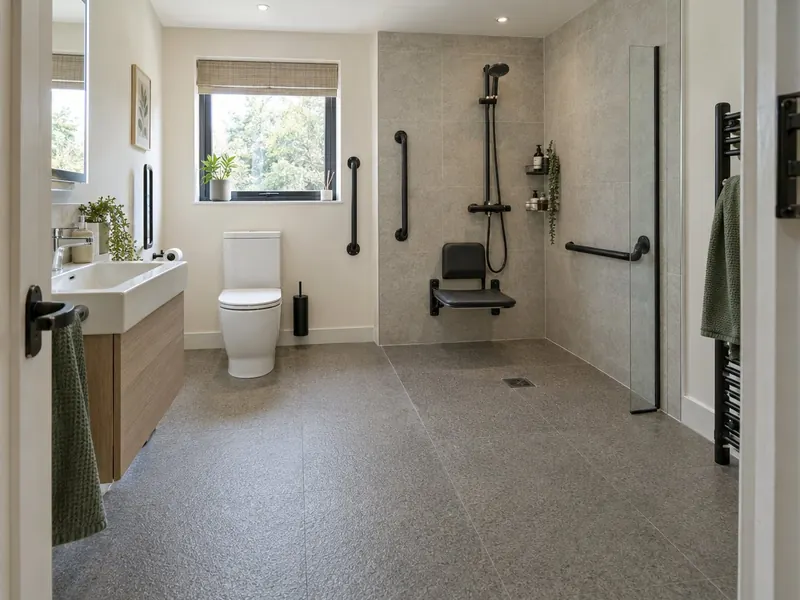
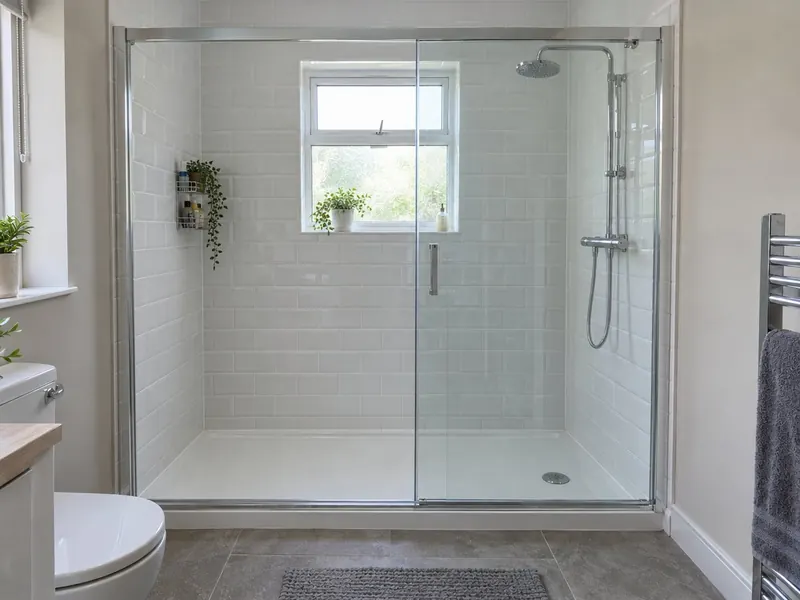
Accessible bathroom with a level-access shower, seat and grab rails

Stepping over the side of a bath is often the point where people start to struggle in their own bathroom. An accessible bathroom removes that step. The bath comes out, a level or very low shower goes in, and the room is set up with a seat, rails where your hands naturally reach and a floor that grips when wet. Done well, it looks like a modern shower room, not a hospital.

We plan these rooms around the person who will use them: how they move, whether they use a walking aid or wheelchair, whether a carer helps, and how that may change. Prices usually run from £6,000 to £14,000 supplied and fitted, including VAT where it applies. Work to adapt a home for a disabled person can often be zero-rated for VAT, and grants may help with the cost; we explain both and can work alongside any council assessment.

What does an accessible bathroom with us include?

  • A home survey of how the room is used now and what needs to change, including door width and turning space
  • Removal of the bath and a level-access or low-profile shower in its place, or a full level-floor wet room
  • A thermostatic shower valve, so the temperature stays safe and steady
  • A fold-down shower seat and grab rails fixed into solid wall or timber backing fitted behind the boards
  • A comfort-height WC, with support rails where needed
  • A basin set at a height that suits sitting or standing
  • Slip-resistant floor tiles or safety flooring that grips when wet
  • Lever taps, contrasting colours for rails and fittings, and good lighting for people with low vision
  • Electrics by a qualified electrician, tested and certified, and an itemised quote you can give to a grant officer

How much does an accessible bathroom cost?

Our UK guide range is £6,000–£14,000 including VAT. Typical prices by kind of job:

Accessible wet room

£8,000–£14,000
  • Level floor throughout
  • Room for a carer or wheelchair
  • Comfort-height WC, support rails

Walk-in or low-level bath

£6,000–£12,000
  • Door or low-entry bath
  • Thermostatic filler
  • Rails and non-slip finish

National guide prices including VAT, reviewed October 2026. London is typically about 25% higher and the North East, Wales and Northern Ireland around 7–12% lower. Your written quote after the survey is the price that counts.

What do you need to decide?

Low tray or level floor

A low-profile tray with a very shallow lip suits someone who can step a little. A tiled level floor falling to a drain is needed for a wheelchair or wheeled shower chair.

Screen or curtain

A half-height or folding screen lets a carer help without getting soaked. A weighted curtain is easier than glass for some people to move.

Seat

A wall-mounted fold-down seat saves space and stays put. A freestanding shower stool is portable but takes floor space and can shift.

Rail positions

Rails go where you need support: beside the WC, at the shower entry and near the seat. We set heights with the user at the survey so they suit their reach.

Walk-in bath

A door or low-entry bath suits people who want to keep bathing, but you have to sit inside while it fills and drains.

Colour contrast

Contrast between floor, walls, rails and the WC seat makes the room easier to use for people with sight loss or dementia.
How does the job run?

  1. Understand the needs

    We talk with you, and any occupational therapist or family member involved, about how the bathroom is used and what is difficult now.

  2. Survey and options

    We measure door widths, turning space, the floor construction and the drainage, and suggest a level-access shower, wet room or bath option.

  3. Quote for you and any grant

    You get an itemised written quote that can go to the council with a grant application; work starts only once any grant approval is in place.

  4. Fit with the least disruption

    We order the work so the toilet is usable for as much of the job as possible, which matters when there is no other one the person can reach.

  5. Set up and handover

    We try the seat, rails and controls with the person who will use them and adjust anything that is not right before we leave.

Who is it right for?

  • Older people who want to stay safely in their own home
  • Anyone recovering from a fall, surgery or a stroke who finds the bath difficult
  • Wheelchair users and people who need a carer to help them wash
  • Homeowners planning ahead who want a bathroom that will still work in ten years

What should you watch out for?

  • If you are applying for a Disabled Facilities Grant, do not start work before the council approves it, or you may lose the grant
  • A level floor on timber joists needs the joists checked and the former set into the floor, or you end up with a lip
  • Grab rails must be fixed into solid wall or timber backing; plasterboard fixings alone will not take body weight
  • Measure the doorway: a wheelchair or walking frame may need a wider door, or one that opens outwards

What rules apply to an accessible bathroom?

Building work to adapt a home for a disabled person can be zero-rated for VAT under HMRC VAT Notice 701/7. It is not means-tested; the person signs an eligibility declaration before work starts. Disabled Facilities Grants and similar schemes are means-tested and need council approval before any work begins. All electrics must meet BS 7671, with 30 mA RCD protection on every circuit.

England

In England, a Disabled Facilities Grant from your local council can pay up to £30,000 towards adaptations such as a level-access shower. Fitting a new electric shower, or any other new circuit or wiring change in the bathroom, is notifiable under Part P.

Wales

In Wales, Disabled Facilities Grants of up to £36,000 are applied for through your local council. The Welsh Part P has a wider list of notifiable electrical work than England.

Scotland

Scotland does not have Disabled Facilities Grants. Councils run a Scheme of Assistance instead, which can help with adaptations, so contact your council before planning the work. A building warrant may be needed if the drainage is altered for a level-access floor.

Northern Ireland

In Northern Ireland, Disabled Facilities Grants of up to £25,000 are handled through the Housing Executive. Building control covers changes to drainage and ventilation, and wiring should follow BS 7671.

FAQ

Accessible bathrooms: your questions answered

How much does an accessible bathroom cost?

An accessible bathroom typically costs £6,000 to £14,000 supplied and fitted, including VAT. A level-access shower with a seat and rails in place of a bath is usually £6,000 to £10,500, a full accessible wet room with room for a carer or wheelchair £8,000 to £14,000, and a walk-in or low-level bath £6,000 to £12,000. VAT relief or a grant may reduce what you pay.

Can I get a grant for an accessible bathroom?

You may be able to. A Disabled Facilities Grant can cover adaptations such as a level-access shower: up to £30,000 in England, £36,000 in Wales and £25,000 in Northern Ireland through the Housing Executive. Scotland uses a council Scheme of Assistance instead. Grants are means-tested and must be approved before work starts. Our guide to grants and VAT relief explains the steps.

Do I pay VAT on a disabled bathroom?

Often not. Building work to adapt a home for a disabled person, such as converting a bath to a level-access shower, can be zero-rated under HMRC VAT Notice 701/7. It is not means-tested; the person, or someone on their behalf, signs an eligibility declaration. We go through which items qualify with you before quoting.

What is the difference between an accessible bathroom and a wet room?

An accessible bathroom is defined by who it is for; a wet room is a way of building the floor. Many accessible bathrooms are built as wet rooms because a level, fully tanked floor removes every step. Others use a low-profile tray, which costs less and suits people who can manage a small lip.

How long does it take to fit an accessible bathroom?

Five to ten working days is typical. A low-profile tray in place of a bath sits at the shorter end; a full wet room with a level floor, tanking and new rails takes longer. We plan the order of work so the toilet is usable for as much of the job as possible.

Where should grab rails go in a bathroom?

Grab rails go where you need support to move: beside the WC, at the shower entry, near the shower seat and sometimes beside the basin. The right heights depend on the person, so we set them at the survey with the person who will use them, or follow an occupational therapist recommendation if there is one.

Can you fit a level-access shower upstairs?

Yes. On a timber floor, the joists are checked and a shower former is set down into the floor so the finished surface is level with the rest of the room. Where the joists run the wrong way or cannot be cut, a very low-profile tray with a gentle ramp is the alternative.

Is a walk-in bath better than a level-access shower?

It depends on whether bathing matters to you. A walk-in bath lets you keep a soak without climbing over the side, but you must sit in it while it fills and empties. A level-access shower is quicker, easier for a carer to help with and works with a wheelchair or shower chair.

Ready for a bathroom that fits properly?

Book a free home survey. You get a measured layout and an itemised written quote before any work starts.