Free home survey & written quote · Fitted bathrooms across England, Wales, Scotland & Northern Ireland0800 088 6341
Fitted Bathrooms
Furniture, finishes & services

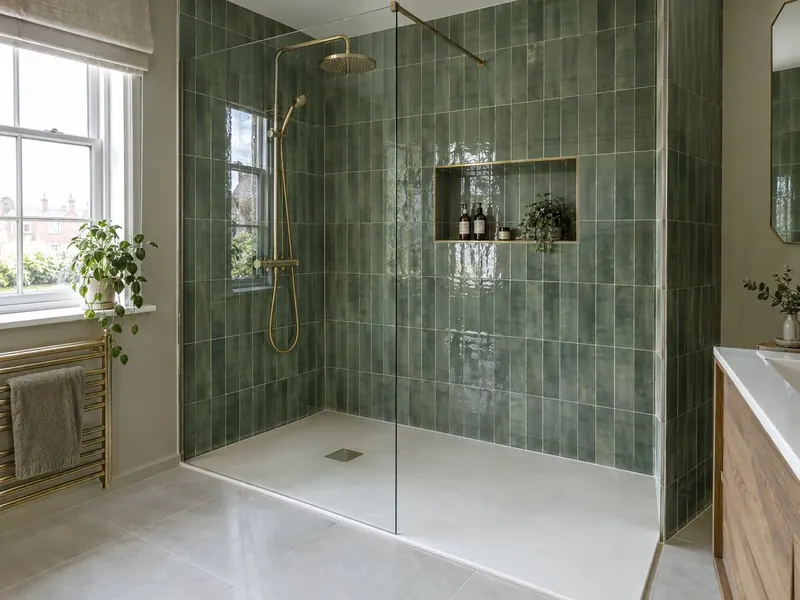
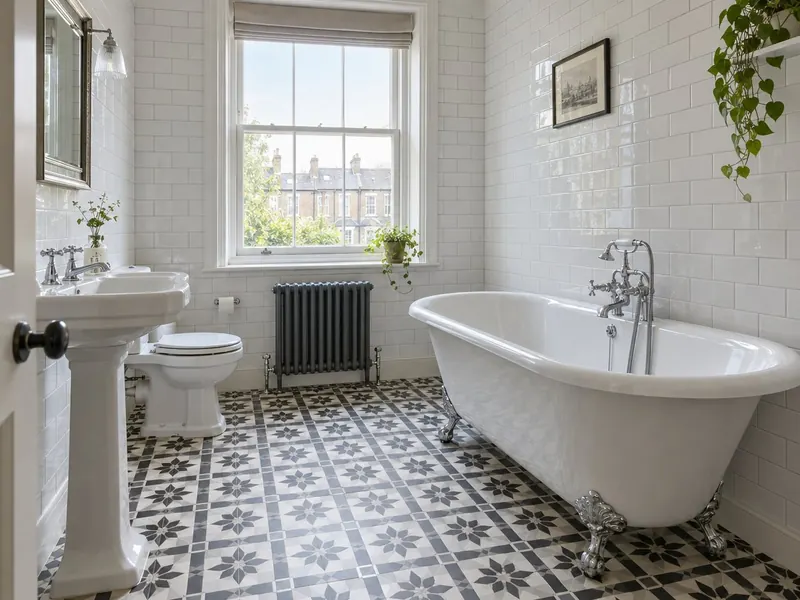
Bathroom tiling in ceramic, porcelain and stone

Bathroom tiling is the preparation and laying of ceramic, porcelain or stone tiles on bathroom walls and floors, including waterproofing the wet areas, setting the tiles out, fixing them with a suitable adhesive and finishing with grout, trims and silicone.

From £45 per m² inc VAT2–4 working daysFree home survey
Porcelain tiles being laid in a bathroom

Most of the work in good tiling happens before a tile goes on. The wall has to be flat, sound and strong enough for the weight, and the shower area waterproofed so a hairline crack in the grout never reaches the board behind. Then comes the setting-out: centring tiles on the window or basin, deciding where cuts fall, and lining joints up with niches and edges. Large tiles show every bump in a wall, so they need more preparation, not less.

Bathroom tiling is priced per square metre. Ceramic wall tiles typically cost £45 to £65 per m² supply and fit, porcelain on walls and floors £60 to £90 per m², and large-format porcelain or natural stone £85 to £130 per m², including VAT. A typical bathroom takes two to four working days to tile, depending on the area, the tile size and how much preparation the walls need.

What does bathroom tiling with us include?

  • Measuring wall and floor areas and working out quantities with an allowance for cuts
  • Checking walls for flatness and strength, and boarding with cement-based backer board where needed
  • Tanking the shower area and the walls around the bath with a waterproof membrane or liquid system
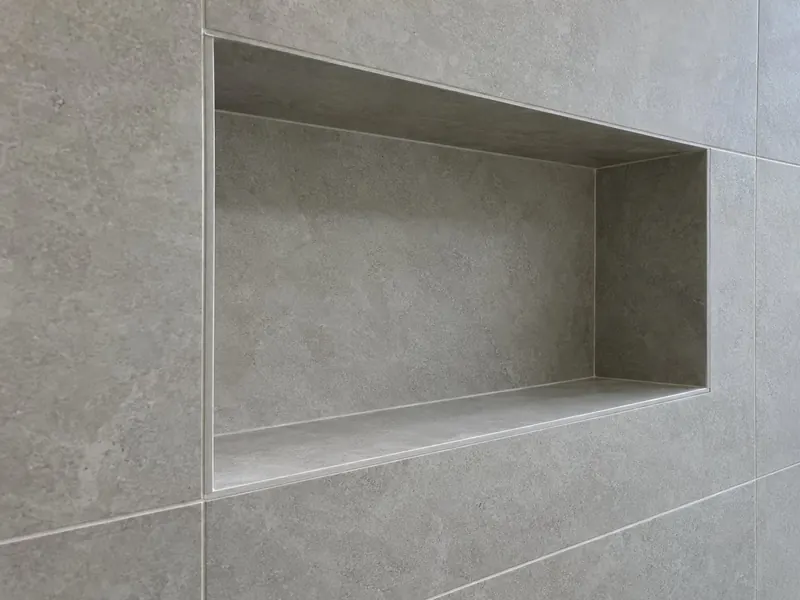
  • Setting out so cuts are even and joints line up with niches, windows and edges
  • Fixing with an adhesive suited to the tile and the surface, with levelling clips for large tiles
  • Floor preparation: overlaying timber floors with ply or backer board, or levelling a screed
  • Grouting, trims or mitred edges, and silicone at internal corners, the bath and the tray
  • Sealing natural stone and cleaning off grout haze before handover

How much does bathroom tiling cost?

Our UK guide range is £45–£90 per m² including VAT. Typical prices by kind of job:

Ceramic

£45–£65 per m²
  • Standard ceramic wall tiles
  • Wet areas or half height
  • Grout and trims

Large-format or stone

£85–£130 per m²
  • Large-format porcelain or natural stone
  • Mitred edges, niches
  • Sealing where needed

National guide prices including VAT, reviewed October 2026. London is typically about 25% higher and the North East, Wales and Northern Ireland around 7–12% lower. Your written quote after the survey is the price that counts.

What do you need to decide?

Ceramic or porcelain

Ceramic is lighter, easier to cut and cheaper, and is fine on walls. Porcelain is denser and absorbs less water, so it suits floors and showers.

Tile size

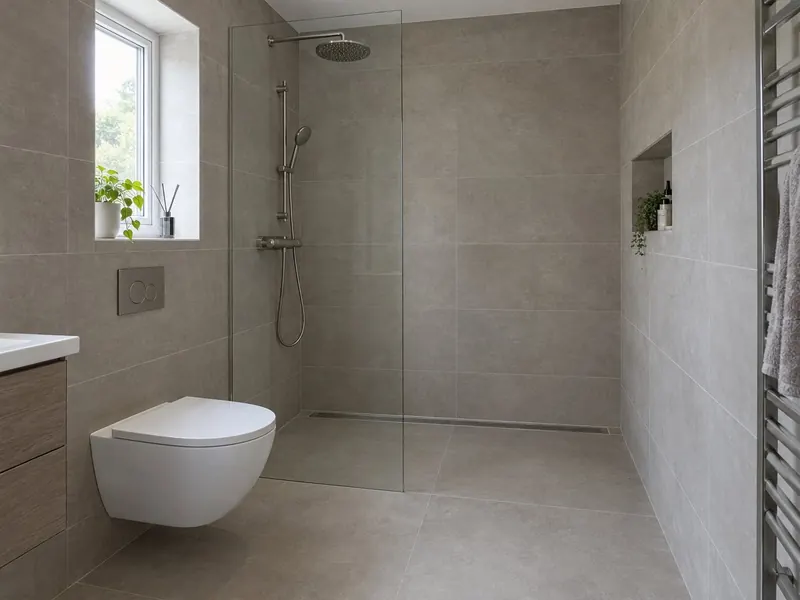
Large-format tiles mean fewer grout lines but need flat walls and more preparation. Small tiles and mosaics follow uneven surfaces and grip better underfoot.

Floor grip

For a bathroom floor, choose a matt or textured tile with a slip rating of R10 or above. Smaller tiles with more grout lines grip better in a shower.

Grout

Cement-based grout is standard. Epoxy grout resists stains and mould better and suits showers, but takes longer to apply and costs more.

Edges

Metal or PVC trims are quick and protect tile edges. Mitred edges look cleaner on porcelain and take more labour.

Natural stone

Marble, limestone and travertine need sealing and gentle cleaners, and can mark. Stone-effect porcelain gives a similar look without the upkeep.
How does the job run?

  1. Measure and order

    We measure the areas, agree the layout and order enough tiles for cuts and a few spare for future repairs.

  2. Prepare

    Walls are boarded or patched, floors overlaid or levelled, and the wet areas tanked.

  3. Set out

    Level datum lines go on the walls so the tiles start true and cuts fall evenly at both ends.

  4. Fix

    Walls are tiled up from the datum and floors out from a centre line or the doorway, with clips on large tiles.

  5. Grout and finish

    Grout, trims and silicone go in, stone is sealed and the room is cleaned down.

Who is it right for?

  • New bathrooms where walls and floor are being tiled together
  • Bathrooms with cracked or loose tiles, or water getting through to the wall behind
  • Walk-in showers and wet areas that need tanking under the tiles
  • Refits where the suite stays but the walls and floor need a new look

What should you watch out for?

  • Do not tile straight onto painted plasterboard or old plaster in a shower; board and tank it first
  • Order around 10% extra, more for patterned layouts, and keep a box for future repairs
  • Large-format tiles need a very flat wall; ask how uneven walls will be dealt with before you choose them
  • Check whether the quote covers the tiles themselves or only labour, adhesive and grout

What rules apply to bathroom tiling?

Re-tiling a bathroom does not need planning permission or building regulations approval. In a flat, check the lease before changing to hard floor tiles, because sound insulation and the risk of leaks to the flat below matter, and wet rooms often need freeholder consent. In a listed building, removing original tiles that contribute to its character can need listed building consent.

England

In England, tiling itself is not building regulations work. If it is part of forming a level shower floor with new drainage, that drainage can be Part H work, and any new electrics are covered by Part P.

Wales

In Wales, tiling is not controlled work. Moving electrical points to suit a new tile layout falls under the Welsh Part P, which covers more bathroom electrical work than the English version.

Scotland

In Scotland, re-tiling does not need a building warrant. Forming a new bathroom or altering drainage for a tiled shower floor may, so check before the floor is opened.

Northern Ireland

In Northern Ireland, tiling does not need building control approval. Building control comes in only where drainage or structure is altered alongside it.

FAQ

Bathroom tiling: your questions answered

How much does bathroom tiling cost per m²?

Bathroom tiling typically costs £45 to £65 per m² for ceramic wall tiles, £60 to £90 per m² for porcelain on walls and floors, and £85 to £130 per m² for large-format porcelain or natural stone, supplied and fitted including VAT. Boarding, tanking or levelling a floor adds to the cost where the surface needs work.

How long does it take to tile a bathroom?

Two to four working days for most bathrooms. A small room tiled to the wet areas only can be quicker; full-height porcelain, large-format tiles, a tiled shower floor or a herringbone pattern take longer. Adhesive and grout also need time to cure before the shower is used.

Can you tile over existing bathroom tiles?

Sometimes, but it is rarely the right choice. Tiling over tiles adds weight, brings the wall forward so trims and fittings no longer line up, and hides any loose tiles or water damage underneath. It is only worth considering where the old tiles are firmly bonded and the wall can take the extra load.

Do I need to tank a bathroom before tiling?

The shower area should always be tanked, because tiles and grout are not waterproof on their own. Around a bath with a shower over it, tanking the walls to above the shower head is sensible. A wet room needs the whole floor and the lower walls tanked.

What tiles are best for a bathroom floor?

Porcelain is usually the most practical bathroom floor tile, because it absorbs very little water and wears well. Choose a matt or textured finish with a slip rating of R10 or above. Our bathroom tiles guide covers sizes and finishes in more detail.

Should bathroom tiles go floor to ceiling?

Full-height tiling is easier to wipe clean and looks finished, but it adds area and cost. Tiling just the wet areas and using bathroom paint elsewhere is a reasonable way to save money in a well-ventilated room.

Can large tiles be used in a small bathroom?

Yes. Large-format tiles mean fewer grout lines, which can make a small room look calmer. They need flat walls and careful setting-out so that cuts are not left as thin slivers by the door or window.

Do bathroom tiles need sealing?

Glazed ceramic and porcelain tiles do not need sealing, but natural stone such as marble, limestone and travertine does, and some unglazed porcelain benefits from it. Cement-based grout can be sealed to slow staining; epoxy grout does not need it.

Ready for a bathroom that fits properly?

Book a free home survey. You get a measured layout and an itemised written quote before any work starts.