
What does bathroom tiling cost in County Armagh?
Our guide range in County Armagh is £40–£80 per m² including VAT. Prices in County Armagh run at about 12% below the UK guide, based on Northern Ireland labour rates.
Ceramic
- Grout and trims
Porcelain
- Porcelain walls and floor
Large-format or stone
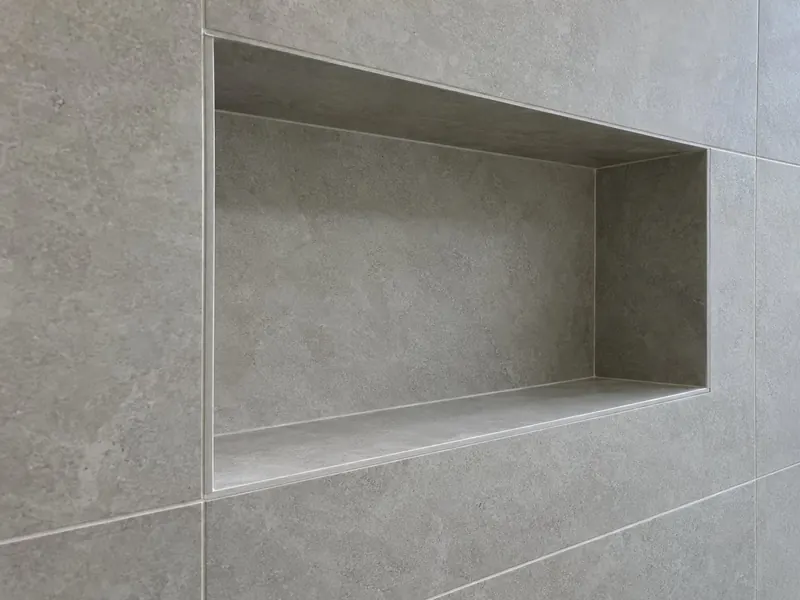
- Mitred edges, niches
Guide prices for County Armagh including VAT. Your itemised written quote after the free survey is the price that counts.
Which towns do we cover in County Armagh?
Supplies across most of County Armagh are soft. Soft water is kind to grout, so mid-tone and darker grouts stay looking fresh. Hardness varies street by street, so check the figure for your postcode with your water supplier. Whatever the age of your Craigavon home, large-format tiles need flat walls, so the survey checks how much preparation they will take.
What the job includes
- Sealing natural stone and cleaning off grout haze before handover
- Measuring wall and floor areas and working out quantities with an allowance for cuts
- Fixing with an adhesive suited to the tile and the surface, with levelling clips for large tiles
- Tanking the shower area and the walls around the bath with a waterproof membrane or liquid system
- Grouting, trims or mitred edges, and silicone at internal corners, the bath and the tray
- Setting out so cuts are even and joints line up with niches, windows and edges
Decisions to make first
Grout
Cement-based grout is standard. Epoxy grout resists stains and mould better and suits showers, but takes longer to apply and costs more.
Tile size
Large-format tiles mean fewer grout lines but need flat walls and more preparation. Small tiles and mosaics follow uneven surfaces and grip better underfoot.
Natural stone
Marble, limestone and travertine need sealing and gentle cleaners, and can mark. Stone-effect porcelain gives a similar look without the upkeep.
Floor grip
For a bathroom floor, choose a matt or textured tile with a slip rating of R10 or above. Smaller tiles with more grout lines grip better in a shower.
Rules that apply in Northern Ireland
Re-tiling a bathroom does not need planning permission or building regulations approval. In a flat, check the lease before changing to hard floor tiles, because sound insulation and the risk of leaks to the flat below matter, and wet rooms often need freeholder consent. In a listed building, removing original tiles that contribute to its character can need listed building consent.
In Northern Ireland, tiling does not need building control approval. Building control comes in only where drainage or structure is altered alongside it.