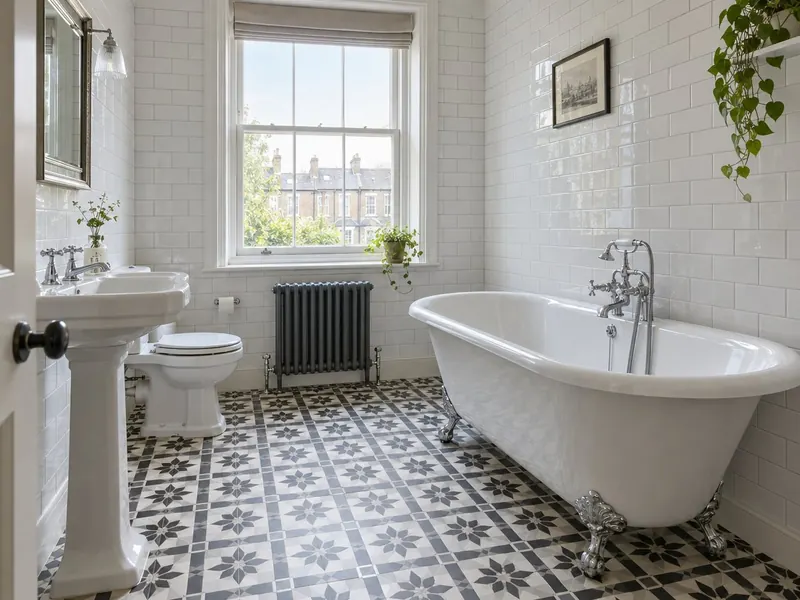
Some bathrooms cannot be put right by swapping the suite. Old lead or corroded pipework, a floor gone soft from years of slow leaks, wiring that predates RCD protection, plaster that has blown behind the tiles, or a layout that never worked all point to taking the room right back. Once the walls are bare, the problems a refit would cover up can be dealt with properly, and the layout can change while everything is open.
A full renovation typically costs £8,000 to £15,000 including VAT and takes eight to fifteen working days. A refresh that keeps the layout but replaces the suite, tiles and floor can be £5,000 to £8,000, while structural work, such as moving walls or combining a bathroom with a separate WC, runs £12,000 to £22,000. The survey looks at what is behind the surfaces before any figure goes on paper.
What does a bathroom renovation with us include?
- A survey of the structure and services: joists, walls, ceilings, pipework, wastes, wiring and ventilation
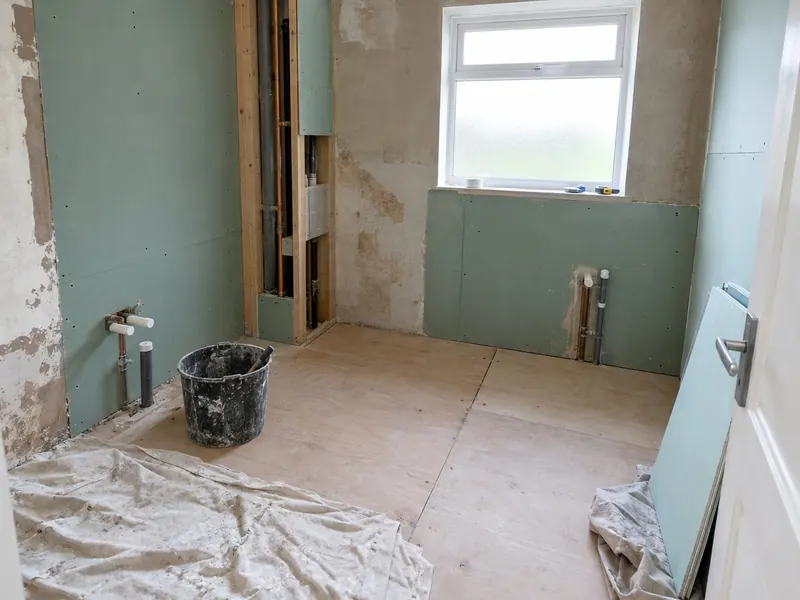
- Strip-out back to brick or studwork, with waste taken away by a licensed waste carrier
- Repairs to rotten floorboards, joists or other timber found once the room is open
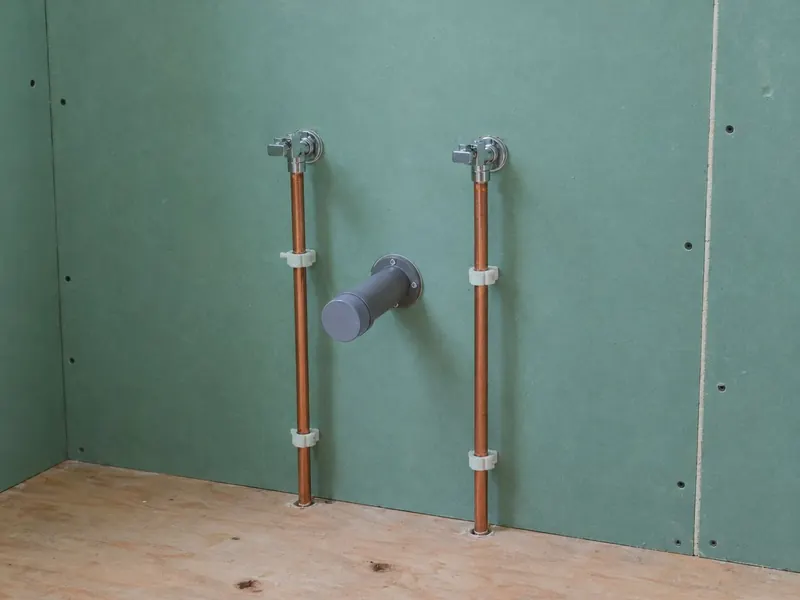
- New hot and cold pipework and wastes, with isolation valves to each fitting
- New wiring, lighting, extractor fan and RCD protection, installed and certified by a qualified electrician
- Re-plastering or boarding, with cement-based boards and tanking in the wet areas
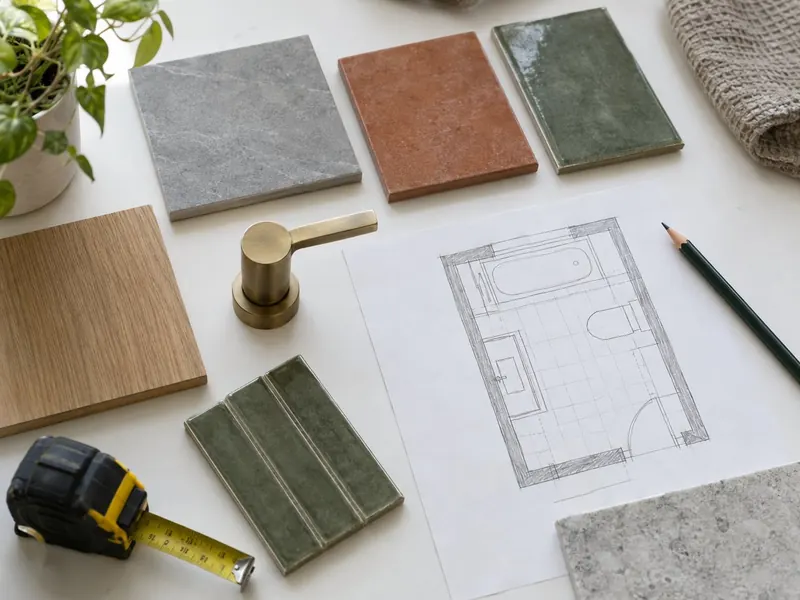
- Layout changes such as moved doors, new stud walls or boxing for concealed cisterns
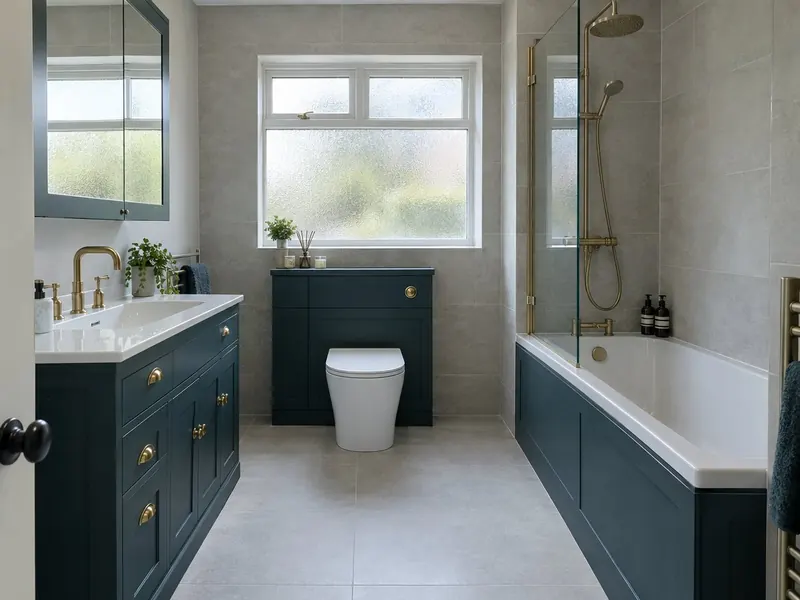
- Tiling, fitting of the suite and furniture, making good and decorating, then handover
How much does a bathroom renovation cost?
Our UK guide range is £7,500–£15,000 including VAT. Typical prices by kind of job:
Refresh
- Same layout, new suite
- Re-tile and re-floor
- Make good and decorate
Full renovation
- Back to brick or studwork
- Re-plaster, new pipework and electrics
- New layout options
Structural
- Walls moved or rooms combined
- New drainage route
- Ventilation and lighting redesigned
National guide prices including VAT, reviewed October 2026. London is typically about 25% higher and the North East, Wales and Northern Ireland around 7–12% lower. Your written quote after the survey is the price that counts.
What do you need to decide?
How far back to strip
Back to brick gives a clean start. Keeping sound plaster on some walls saves time and money, and the survey shows which walls can stay.
Combining rooms
Taking out the wall between a bathroom and a separate WC gives one larger room, but it is structural work and may need building control.
Plaster or boards
Plaster suits dry walls that will be painted. Cement-based tile backer boards are the better base behind showers and under heavy tiles.
Shower floor
With the floor already up, a renovation is the easiest time to form a level shower floor or a full wet room.
Pipe material
Copper suits exposed runs and the area near the boiler. Plastic pipe is quicker under floors and inside walls, and long runs need fewer joints.
Heating
Moving the radiator, adding a heated towel rail or laying underfloor heating is simpler while the room is stripped.