
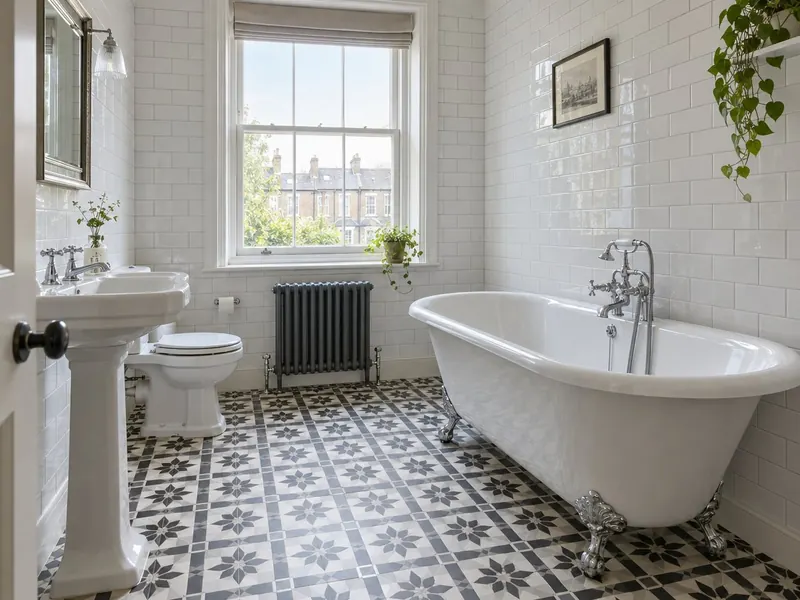
What does a bathroom renovation cost on the Isle of Wight?
Our guide range on the Isle of Wight is £8,400–£16,750 including VAT. Prices on the Isle of Wight run at about 12% above the UK guide, based on South East England labour rates. Travel and delivery to islands and remote areas are priced on your quote.
Refresh
- Same layout, new suite
Full renovation
- Re-plaster, new pipework and electrics
Structural
- Ventilation and lighting redesigned
Guide prices for Isle of Wight including VAT. Your itemised written quote after the free survey is the price that counts.
Which towns do we cover on the Isle of Wight?
Water across much of the Isle of Wight is hard. We plan easy-clean glass, rimless toilets and finishes that do not show limescale. Hardness varies street by street, so check the figure for your postcode with your water supplier. In Newport flats, the lease and the flat below are considered before a renovation is planned, particularly for moving the WC or adding a vent.
What the job includes
- Tiling, fitting of the suite and furniture, making good and decorating, then handover
- Re-plastering or boarding, with cement-based boards and tanking in the wet areas
- New hot and cold pipework and wastes, with isolation valves to each fitting
- Repairs to rotten floorboards, joists or other timber found once the room is open
- Layout changes such as moved doors, new stud walls or boxing for concealed cisterns
- New wiring, lighting, extractor fan and RCD protection, installed and certified by a qualified electrician
Decisions to make first
Heating
Moving the radiator, adding a heated towel rail or laying underfloor heating is simpler while the room is stripped.
Plaster or boards
Plaster suits dry walls that will be painted. Cement-based tile backer boards are the better base behind showers and under heavy tiles.
Combining rooms
Taking out the wall between a bathroom and a separate WC gives one larger room, but it is structural work and may need building control.
Pipe material
Copper suits exposed runs and the area near the boiler. Plastic pipe is quicker under floors and inside walls, and long runs need fewer joints.
Rules that apply in England
Renovating a bathroom inside an existing home does not need planning permission. Listed buildings need listed building consent for alterations that affect their character, which can include internal work and new soil or vent pipes through walls. In a flat, check the lease: freeholder consent is often needed for wet rooms, moving the WC or new extract vents, and sound insulation and leak risk to the flat below matter. Electrical work must meet BS 7671, with 30 mA RCD protection on every bathroom circuit.
In England, structural changes, new drainage or a new connection to the soil stack under Part H, and new circuits under Part P can all be building regulations work. A registered electrician can self-certify the electrics; structural and drainage work may need a building notice or a full plans application to building control.