
What does bathroom plumbing work cost in Rutland?
Our guide range in Rutland is £600–£3,800 including VAT. Prices in Rutland run at about 4% below the UK guide, based on East Midlands labour rates.
Like-for-like
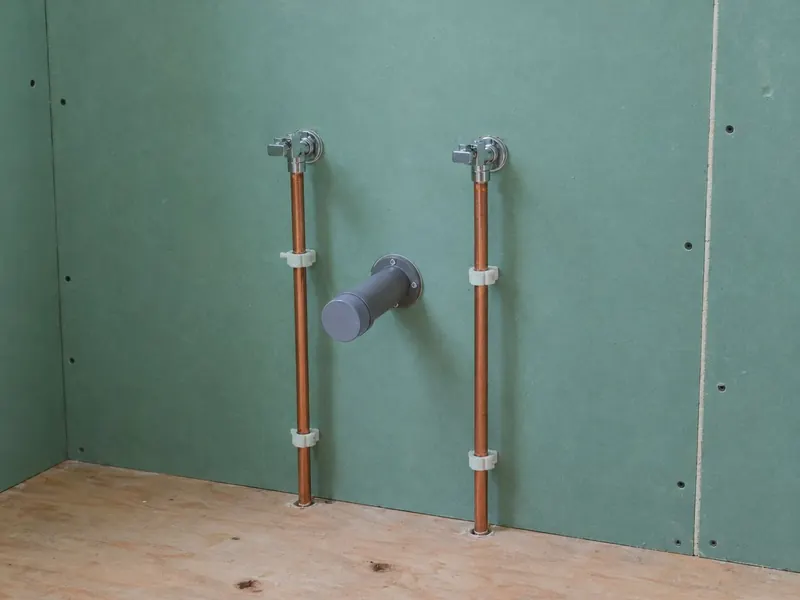
- Isolation valves, new tails
Partial re-route
- Waste re-routed
New layout
- WC moved on the soil stack
Guide prices for Rutland including VAT. Your itemised written quote after the free survey is the price that counts.
Which towns do we cover in Rutland?
Supplies across most of Rutland are hard. Taps, plug wastes and toilet pans scale up quickly, so chrome copes better than matt black, and a removable aerator is worth having. Hardness varies street by street, so check the figure for your postcode with your water supplier. In Oakham flats, any change to the WC or wastes is planned with the lease and the flat below in mind.
What the job includes
- The WC connected to the soil stack, or a new branch where the WC is moving
- A check of your hot water system, and the pressure and flow rate at the bathroom
- A pressure test of new pipework before walls are closed in and floors go down
- Basin, bath and shower wastes sized and laid to a steady fall, with traps that hold their water seal
- New hot and cold pipework in copper or plastic, properly clipped, and insulated where it runs through cold spaces
- Isolation valves on every fitting, so taps, cisterns and valves can be serviced without draining the system
Decisions to make first
Gravity or pumped waste
Gravity drainage is always the first choice. A shower waste pump or macerator solves a run that cannot fall, but adds noise, a power supply and servicing.
Concealed or exposed valves
Concealed shower valves look neater but need an access route for servicing. Exposed bar valves are easier to reach and replace.
Copper or plastic
Copper is rigid and suits pipes on show or near the boiler. Plastic is quicker under floors and inside walls, and long runs need fewer joints.
Hard water
In hard water areas, a scale reducer or water softener protects valves, shower heads and glass. Keep an unsoftened tap in the kitchen for drinking.
Rules that apply in England
New WCs, taps, showers and valves must meet the water fittings rules where you live: a maximum 6-litre flush for new WCs, backflow protection, and no pump connected directly to the mains supply, because shower pumps are only for gravity systems with a cold tank. Unvented hot-water cylinders must be installed by a G3-qualified installer, and any work on a gas boiler by a Gas Safe registered engineer.
In England, the Water Supply (Water Fittings) Regulations 1999 apply. New drainage or a new connection to the soil stack can be building regulations work under Part H, and a macerator or pumped WC is acceptable only where there is also a WC on gravity drainage elsewhere in the home.