- Postcode districts
- TN1, TN3, TN4
- Nearby
- Tonbridge, Crowborough and Sevenoaks
- Guide price
- £8,400–£16,750
- Typical time on site
- 8–15 working days
- Water
- Very hard across most of Kent
- Survey
- Free, at your home
What does a bathroom renovation cost in Tunbridge Wells?
Our guide price for a bathroom renovation in Tunbridge Wells is £8,400–£16,750 including VAT. Labour costs in South East England put local prices at about 12% above the UK guide figure. The figure depends on the size of the room, whether anything moves, and the products you pick.
Refresh
- Re-tile and re-floor
Full renovation
- New layout options
Structural
- Walls moved or rooms combined
Guide prices for Tunbridge Wells including VAT. Your itemised written quote after the free survey is the price that counts.
Working in Tunbridge Wells
As well as Tunbridge Wells itself (TN1, TN3 and TN4), we survey in Tonbridge, Crowborough and Sevenoaks.
In Tunbridge Wells, as anywhere, the age of the house decides a lot: pipe sizes, floor construction and where the soil stack runs. If you have just bought a house in Tunbridge Wells, renovating the bathroom before moving in saves living through the dust. If your Tunbridge Wells home is older and the bathroom still has original pipework or plaster behind the tiles, the survey shows whether a renovation or a refit makes more sense.
Most of Kent has very hard water. We plan easy-clean glass, rimless toilets and finishes that do not show limescale. Hardness varies street by street, so check the figure for your postcode with your water supplier.
What the job includes
- New wiring, lighting, extractor fan and RCD protection, installed and certified by a qualified electrician
- New hot and cold pipework and wastes, with isolation valves to each fitting
- Repairs to rotten floorboards, joists or other timber found once the room is open
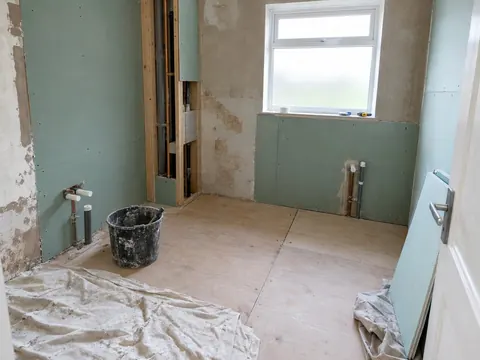
- Strip-out back to brick or studwork, with waste taken away by a licensed waste carrier
Decisions to make first
Plaster or boards
Plaster suits dry walls that will be painted. Cement-based tile backer boards are the better base behind showers and under heavy tiles.
How far back to strip
Back to brick gives a clean start. Keeping sound plaster on some walls saves time and money, and the survey shows which walls can stay.
Rules that apply in England
In England, structural changes, new drainage or a new connection to the soil stack under Part H, and new circuits under Part P can all be building regulations work. A registered electrician can self-certify the electrics; structural and drainage work may need a building notice or a full plans application to building control.