- Postcode districts
- TR14
- Nearby
- Redruth, Falmouth and Truro
- Guide price
- £45–£90 per m²
- Typical time on site
- 2–4 working days
- Water
- Soft across most of Cornwall
- Survey
- Free, at your home
What does bathroom tiling cost in Camborne?
Our guide price for bathroom tiling in Camborne is £45–£90 per m² including VAT. The figure depends on the size of the room, whether anything moves, and the products you pick.
Ceramic
- Grout and trims
Porcelain
- Porcelain walls and floor
Large-format or stone
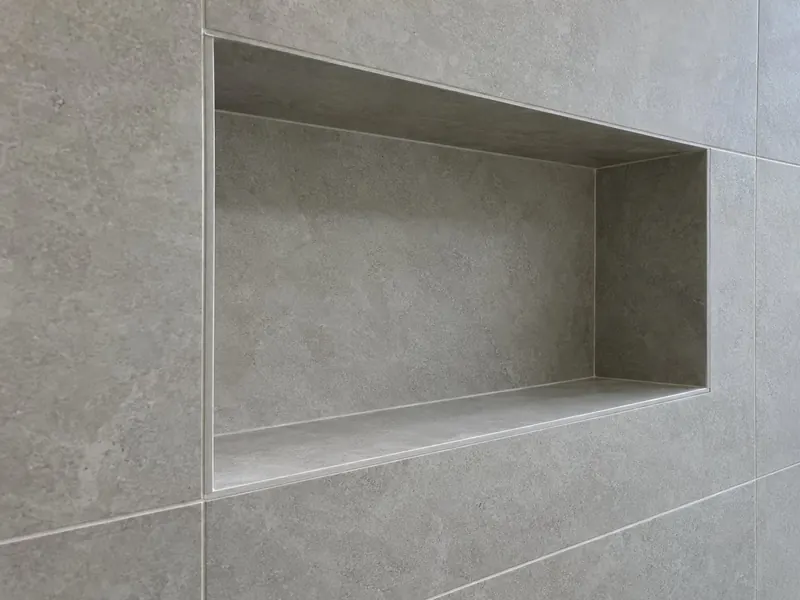
- Mitred edges, niches
Guide prices for Camborne including VAT. Your itemised written quote after the free survey is the price that counts.
Working in Camborne
As well as Camborne itself (TR14), we survey in Redruth, Falmouth and Truro.
Being a smaller town does not change how we work in Camborne: free survey, written quote, one team. For Camborne flats, we check the lease and the floor build-up before laying hard tiles on a timber floor. We measure tiled areas in Camborne bathrooms on site, so the quote is based on real square metres.
Supplies across most of Cornwall are soft. Soft water is kind to grout, so mid-tone and darker grouts stay looking fresh. Hardness varies street by street, so check the figure for your postcode with your water supplier.
What the job includes
- Grouting, trims or mitred edges, and silicone at internal corners, the bath and the tray
- Measuring wall and floor areas and working out quantities with an allowance for cuts
- Checking walls for flatness and strength, and boarding with cement-based backer board where needed
- Floor preparation: overlaying timber floors with ply or backer board, or levelling a screed
Decisions to make first
Ceramic or porcelain
Ceramic is lighter, easier to cut and cheaper, and is fine on walls. Porcelain is denser and absorbs less water, so it suits floors and showers.
Grout
Cement-based grout is standard. Epoxy grout resists stains and mould better and suits showers, but takes longer to apply and costs more.
Rules that apply in England
In England, tiling itself is not building regulations work. If it is part of forming a level shower floor with new drainage, that drainage can be Part H work, and any new electrics are covered by Part P.