- Postcode districts
- DL1, DL2, DL3
- Nearby
- Newton Aycliffe, Yarm and Stockton-on-Tees
- Guide price
- £800–£2,200
- Typical time on site
- 1–2 working days
- Water
- Moderately hard across most of County Durham
- Survey
- Free, at your home
What does a replacement bath cost in Darlington?
For Darlington, our guide range for a replacement bath is £800 to £2,200 including VAT. We adjust the national guide for North East England, where prices are typically about 10% below the UK average. The figure depends on the size of the room, whether anything moves, and the products you pick.
Like-for-like bath
- Silicone and tile repairs
Shower bath
- P or L-shaped shower bath
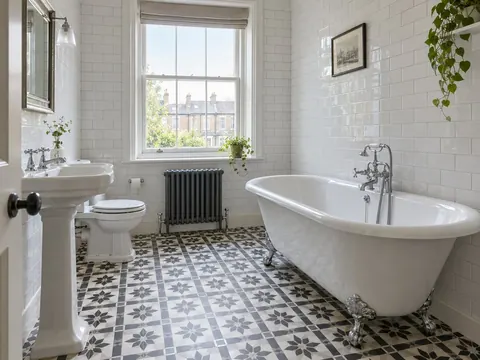
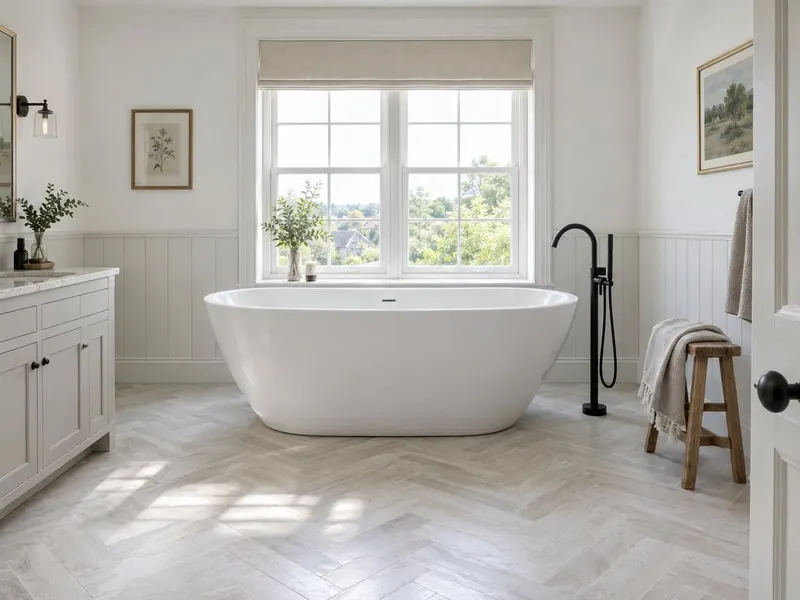
Freestanding bath
- Floor or wall-mounted filler
Guide prices for Darlington including VAT. Your itemised written quote after the free survey is the price that counts.
Working in Darlington
In Darlington we cover DL1, DL2 and DL3; we also cover Newton Aycliffe, 6.6 miles away, and Yarm.
Across a large town like Darlington, homes range from older terraces to newer estates; the survey tells us which pipework and floor we are dealing with. If the bath in your Darlington home is the only thing letting the bathroom down, a swap in one or two days avoids a full refit. Landlords with properties in Darlington can usually have a bath replaced between tenancies in one to two working days.
Supplies across most of County Durham are moderately hard. Taps and wastes will need an occasional descale, and chrome or brushed finishes are easier to keep clean than polished brass. Hardness varies street by street, so check the figure for your postcode with your water supplier.
What the job includes
- New flexible connectors or pipework, with isolation valves on the hot and cold supplies
- Leak testing at the waste, overflow and taps, taking the old bath away and a final clean
- Supply of the new bath, taps or filler, waste and overflow, and bath panel
- Removal of the old bath, including breaking up a cast-iron bath in place where it will not come out whole
Decisions to make first
Freestanding bath
Acrylic freestanding baths are manageable on most floors; stone resin and cast iron are much heavier when full. You need room to clean round the bath and a plan for where the waste and filler come up.
Taps or filler
Deck taps on the rim are the simplest swap. Wall-mounted taps or a bath filler look cleaner but mean opening the wall, and an overflow filler hides the spout altogether.
Rules that apply in England
In England, Part G limits the hot water to a new bath to 48 °C at the outlet, usually with a thermostatic mixing valve, but only in a new dwelling or one created by a change of use. It does not apply to a replacement bath in an existing home, though a thermostatic valve is still sensible where children or older people bathe. New wiring for a shower over the bath or new lights is notifiable under Part P.