
What does a replacement bath cost in Greater London?
Our guide range in Greater London is £1,100–£3,100 including VAT. Prices in Greater London run at about 25% above the UK guide, based on London labour rates.
Like-for-like bath
- Silicone and tile repairs
Shower bath
- P or L-shaped shower bath
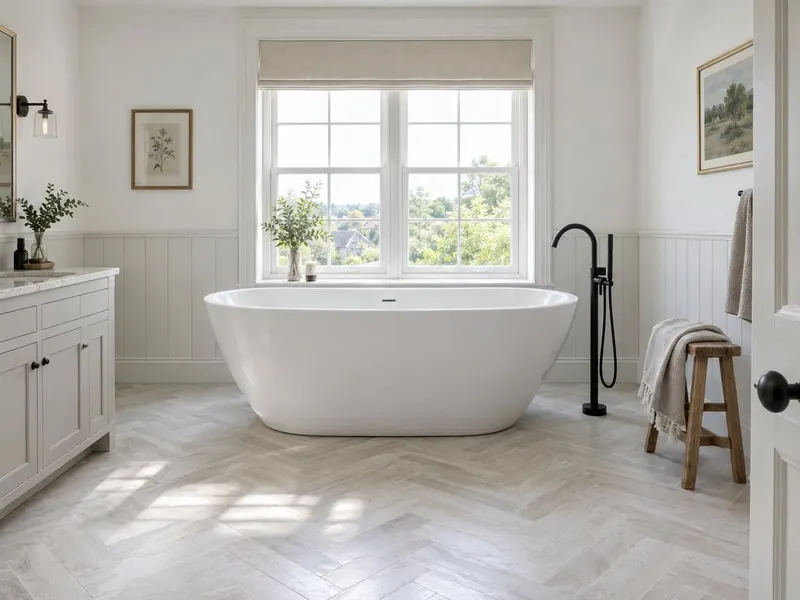
Freestanding bath
- Floor or wall-mounted filler
Guide prices for Greater London including VAT. Your itemised written quote after the free survey is the price that counts.
Which towns do we cover in Greater London?
- Brent
- Islington
- Bexley
- Barking
- Archway
- Sutton
- Croydon
- Ilford
- Enfield
- Harrow
- Tottenham
- Walthamstow
- Dagenham
- Becontree
- Romford
- Hayes
- Wembley
- Fulham
- Edmonton
- Southall
- Putney
- Battersea
- Canary Wharf
- Purley
- Peckham
- Chingford
- Uxbridge
- Wimbledon
- Stamford Hill
- Brixton
- Hounslow
- Finchley
- Cricklewood
- Mitcham
- Feltham
- Acton
- Beckenham
- Chelsea
- Streatham
- South Croydon
- Leytonstone
- Eltham
- Morden
- Carshalton
- Catford
- Willesden
- Canning Town
- Holloway
- Welling
- Shepherds Bush
- Surbiton
- Greenford
- Heston
- Stratford
- Chiswick
- Thamesmead
- Ruislip
- Greenwich
- Barnet
- Kilburn
- Wood Green
- Muswell Hill
- Bow
- Highbury
- Camden Town
- Northolt
- Coulsdon
- Hornchurch
- Blackheath
- Isleworth
Supplies across most of Greater London are very hard. Taps, plug wastes and toilet pans scale up quickly, so chrome copes better than matt black, and a removable aerator is worth having. Hardness varies street by street, so check the figure for your postcode with your water supplier. Landlords with properties in Brent can usually have a bath replaced between tenancies in one to two working days.
What the job includes
- Filling the bath before sealing, so the silicone cures with the bath at its heaviest
- Removal of the old bath, including breaking up a cast-iron bath in place where it will not come out whole
- New flexible connectors or pipework, with isolation valves on the hot and cold supplies
- Levelling the bath on adjustable feet or a cradle, with timber battens fixed to the walls under the rim
- Supply of the new bath, taps or filler, waste and overflow, and bath panel
- A survey of the bath opening, the floor, the waste route, the supplies and the tiles around the bath
Decisions to make first
Taps or filler
Deck taps on the rim are the simplest swap. Wall-mounted taps or a bath filler look cleaner but mean opening the wall, and an overflow filler hides the spout altogether.
Freestanding bath
Acrylic freestanding baths are manageable on most floors; stone resin and cast iron are much heavier when full. You need room to clean round the bath and a plan for where the waste and filler come up.
Acrylic or steel
Acrylic is warm to the touch, light and the usual choice; thicker, reinforced acrylic flexes less. Enamelled steel is rigid and hard-wearing but feels colder, and needs sound-deadening pads to stop it drumming.
Bath panel
Acrylic panels are cheap and easy to clean; wood-effect panels match fitted furniture; a tiled panel on a frame looks built-in but needs an access hatch for the waste.
Rules that apply in England
Replacing a bath in an existing bathroom does not need planning permission, and a straight swap is not normally building regulations work. New taps or a filler must meet the water fittings rules where you live, including backflow protection. If the new bath is much heavier than the old one, such as a cast-iron or stone resin freestanding bath, the floor needs checking, and strengthening joists is structural work that may need building control approval.
In England, Part G limits the hot water to a new bath to 48 °C at the outlet, usually with a thermostatic mixing valve, but only in a new dwelling or one created by a change of use. It does not apply to a replacement bath in an existing home, though a thermostatic valve is still sensible where children or older people bathe. New wiring for a shower over the bath or new lights is notifiable under Part P.