- Postcode districts
- L1, L2, L3, L4, L5, L6 + 12 more
- Nearby
- Birkenhead, Wallasey and Litherland
- Guide price
- £850–£2,400
- Typical time on site
- 1–2 working days
- Water
- Soft across most of Merseyside
- Survey
- Free, at your home
What does a replacement bath cost in Liverpool?
As a guide, budget £850 to £2,400 including VAT for a replacement bath in Liverpool; your written quote will pin it down. Labour costs in North West England put local prices at about 6% below the UK guide figure. The figure depends on the size of the room, whether anything moves, and the products you pick.
Like-for-like bath
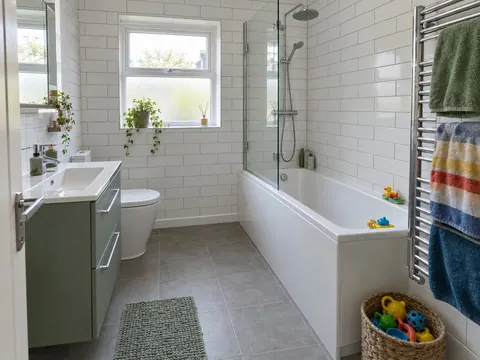
- New acrylic or steel bath, panel and taps
Shower bath
- Re-tiling to the bath area
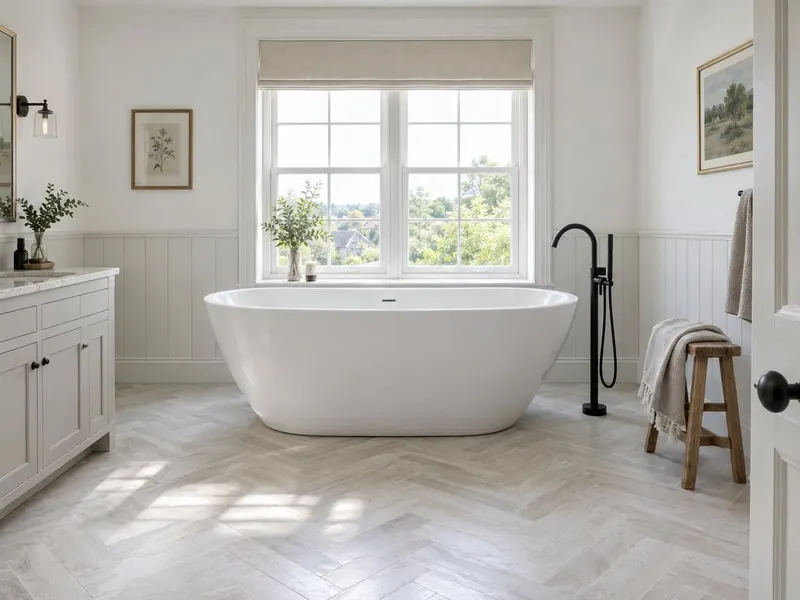
Freestanding bath
- Freestanding acrylic or stone resin
Guide prices for Liverpool including VAT. Your itemised written quote after the free survey is the price that counts.
Working in Liverpool
In Liverpool we cover L1, L2, L3 and 15 more postcode districts; we also cover Birkenhead, 1.9 miles away, and Wallasey.
In a city the size of Liverpool, parking and access for a skip are worth sorting before the start date — we will ask at the survey. Before a new bath is ordered for a Liverpool home, we measure the stairs and landing as well as the opening. Survey visits in Liverpool cover the bath, the tiles around it and the waste route, so the quote reflects your bathroom rather than a standard job.
Water across much of Merseyside is soft. In soft water, taps, wastes and toilet pans scale up slowly, so brushed and matt finishes are a safe choice. Hardness varies street by street, so check the figure for your postcode with your water supplier.
What the job includes
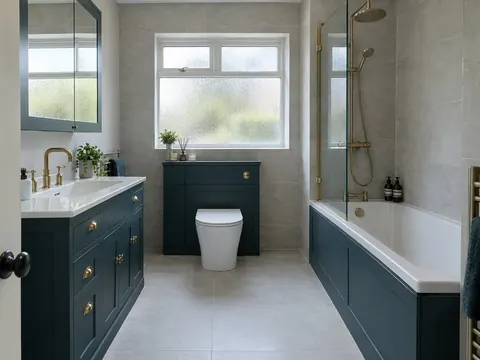
- Tile repairs or re-tiling around the bath, and a fixed screen where there is a shower over it
- Levelling the bath on adjustable feet or a cradle, with timber battens fixed to the walls under the rim
- Filling the bath before sealing, so the silicone cures with the bath at its heaviest
- Supply of the new bath, taps or filler, waste and overflow, and bath panel
Decisions to make first
Freestanding bath
Acrylic freestanding baths are manageable on most floors; stone resin and cast iron are much heavier when full. You need room to clean round the bath and a plan for where the waste and filler come up.
Acrylic or steel
Acrylic is warm to the touch, light and the usual choice; thicker, reinforced acrylic flexes less. Enamelled steel is rigid and hard-wearing but feels colder, and needs sound-deadening pads to stop it drumming.
Rules that apply in England
In England, Part G limits the hot water to a new bath to 48 °C at the outlet, usually with a thermostatic mixing valve, but only in a new dwelling or one created by a change of use. It does not apply to a replacement bath in an existing home, though a thermostatic valve is still sensible where children or older people bathe. New wiring for a shower over the bath or new lights is notifiable under Part P.