
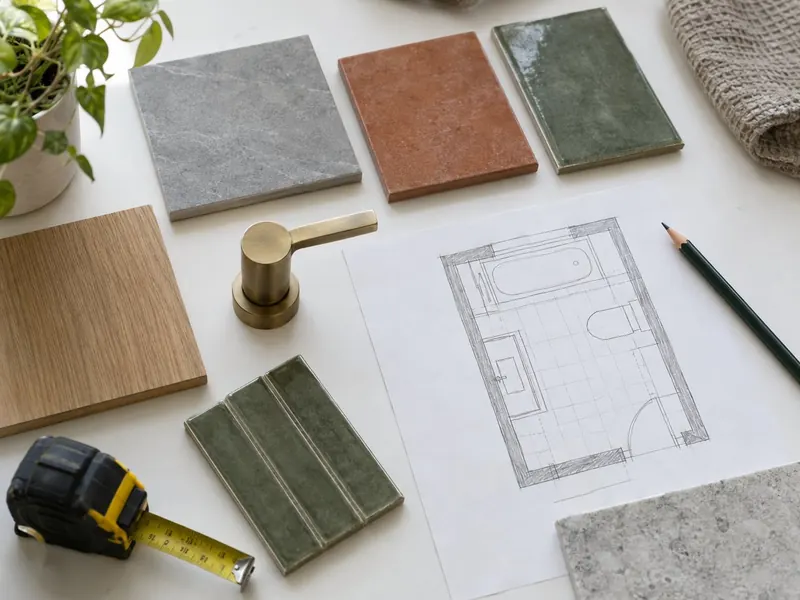
What does a new bathroom design cost in Lancashire?
Design has no separate fee on a supply-and-fit job. A complete fitted bathroom in Lancashire typically costs £6,100–£11,250 including VAT. Prices in Lancashire run at about 6% below the UK guide, based on North West England labour rates.
Survey and layout
- Layout options on paper
Detailed design
- Lighting and electrical plan
Full project
- Design, supply and fit
Guide prices for Lancashire including VAT. Your itemised written quote after the free survey is the price that counts.
Which towns do we cover in Lancashire?
- Preston
- Burnley
- Blackburn
- Blackpool
- Morecambe
- Lancaster
- Lytham St Annes
- Skelmersdale
- Leyland
- Accrington
- Chorley
- Darwen
- Thornton-Cleveleys
- Nelson
- Fleetwood
- Ormskirk
- Rawtenstall
- Colne
- Poulton-le-Fylde
- Heysham
- Haslingden
Water across much of Lancashire is soft. That leaves you free to choose matt black, brushed brass or clear glass without worrying much about limescale. Hardness varies street by street, so check the figure for your postcode with your water supplier. Whether you are in Preston or elsewhere in Lancashire, layout options come with an itemised written quote.
What the job includes
- A conversation about who uses the room, when, and what does not work about the current one
- A measured survey of the room, including ceiling heights, slopes, window and door positions and any boxing
- Checks on the soil stack, waste routes, joist direction, water pressure, hot water system and existing electrics
- A product list covering the suite, brassware, furniture, tiles, lighting and ventilation
- Layout options drawn to scale, showing the bath or shower, WC, basin, storage and towel rail
- A clear view of which changes are cheap and which mean moving drainage or opening floors
Decisions to make first
Where the shower goes
A shower on an outside wall is easier to ventilate; one under a sloping ceiling needs full head height where you stand, not just at the high side.
The door
Re-hanging the door on the other side, fitting a sliding pocket door or moving the opening can free up a whole wall in a small room.
Planning for later
Timber noggins in the walls for future grab rails, a wider door or a level shower floor cost far less to build in now than to add later.
Keep or change the layout
Keeping the WC and shower where they are saves on plumbing. The WC is the costly one to move, because it is tied to the soil stack.
Rules that apply in England
Changing the layout inside an existing bathroom does not need planning permission. The design does have to respect the electrical zones around the bath and shower under BS 7671, the water fittings rules for new WCs and taps, including a maximum 6-litre flush, and adequate extract ventilation. Listed buildings need listed building consent for alterations affecting their character, including new soil or vent pipes through walls, and in a flat the lease often requires freeholder consent for moving the WC or adding a new vent.
In England, a new connection to the soil stack or new drainage can be building regulations work under Part H, and new circuits or alterations to circuits in the bathroom are notifiable under Part P. Where a new bathroom is formed, Approved Document F asks for extract at 15 l/s intermittent or 8 l/s continuous.