- Postcode districts
- MK6, MK9, MK10, MK14
- Nearby
- Leighton Buzzard, Ampthill and Kempston
- Guide price
- £650–£4,500
- Typical time on site
- 1–5 working days
- Water
- Hard across most of Buckinghamshire
- Survey
- Free, at your home
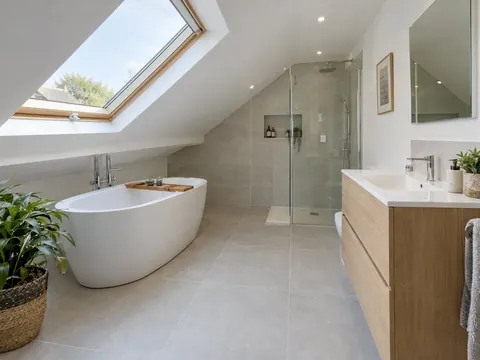
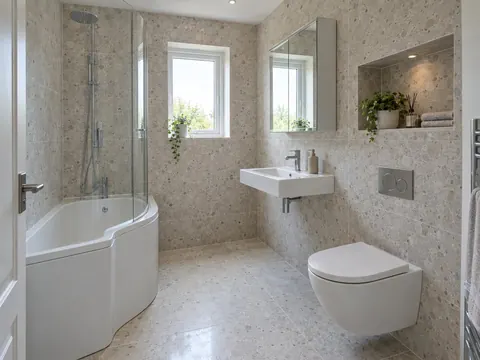
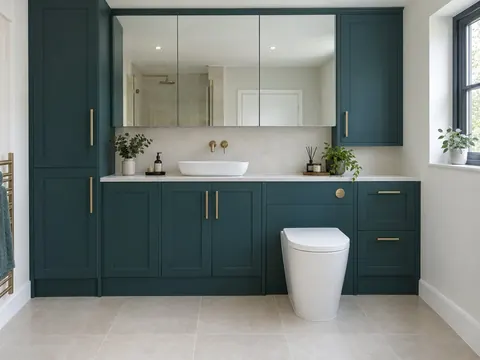
What does bathroom plumbing work cost in Milton Keynes?
In Milton Keynes, bathroom plumbing work typically costs £650–£4,500 including VAT, based on South East England prices. Prices in South East England run at about 12% above the national guide, mainly because of labour rates. The figure depends on the size of the room, whether anything moves, and the products you pick.
Like-for-like
- New suite in the same positions
Partial re-route
- New hot and cold runs
New layout
- Pump or pressure upgrade
Guide prices for Milton Keynes including VAT. Your itemised written quote after the free survey is the price that counts.
Working in Milton Keynes
As well as Milton Keynes itself (MK6, MK9, MK10 and 1 more postcode districts), we survey in Leighton Buzzard, Ampthill and Kempston.
In a city the size of Milton Keynes, parking and access for a skip are worth sorting before the start date — we will ask at the survey. Plumbing surveys in Milton Keynes include a look at the existing pipework for lead, corrosion or poor support before we quote. If your Milton Keynes water is hard, a scale reducer or softener on the bathroom supplies can protect valves and shower heads.
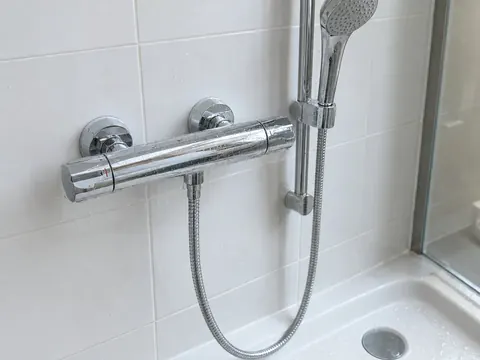
Water across much of Buckinghamshire is hard. Taps, plug wastes and toilet pans scale up quickly, so chrome copes better than matt black, and a removable aerator is worth having. Hardness varies street by street, so check the figure for your postcode with your water supplier.
What the job includes
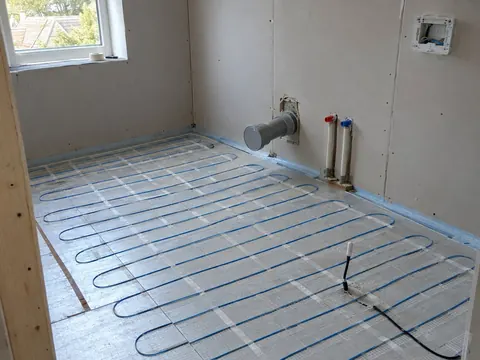
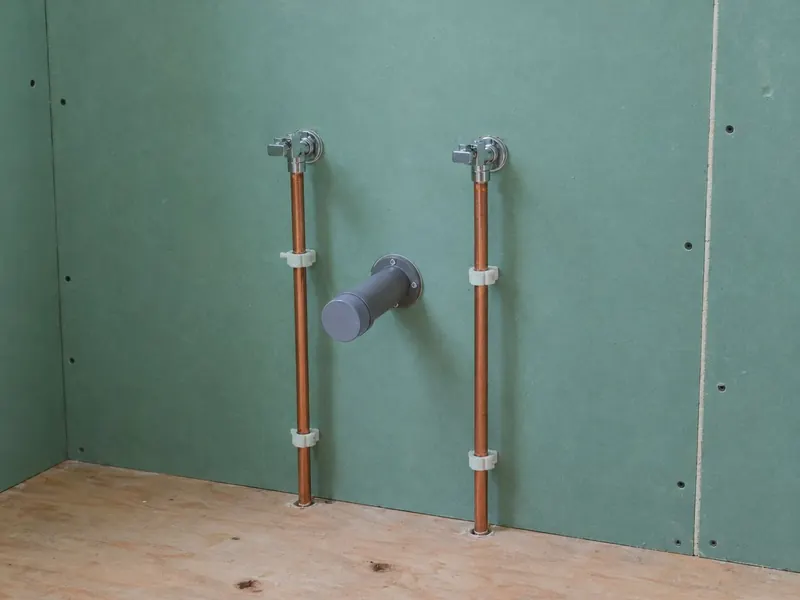
- A pressure test of new pipework before walls are closed in and floors go down
- Basin, bath and shower wastes sized and laid to a steady fall, with traps that hold their water seal
- Isolation valves on every fitting, so taps, cisterns and valves can be serviced without draining the system
- Draining down and isolating supplies, with the rest of the house back on water as soon as possible
Decisions to make first
Pipe routes
Drilling through the middle of joists, rather than notching the tops, keeps the floor strong. Routes are planned with the joist direction in mind.
Copper or plastic
Copper is rigid and suits pipes on show or near the boiler. Plastic is quicker under floors and inside walls, and long runs need fewer joints.
Rules that apply in England
In England, the Water Supply (Water Fittings) Regulations 1999 apply. New drainage or a new connection to the soil stack can be building regulations work under Part H, and a macerator or pumped WC is acceptable only where there is also a WC on gravity drainage elsewhere in the home.