- Postcode districts
- SK1, SK2, SK3, SK4, SK5, SK6 + 1 more
- Nearby
- Bredbury, Hazel Grove and Cheadle Hulme
- Guide price
- £7,000–£14,000
- Typical time on site
- 8–15 working days
- Water
- Soft across most of Greater Manchester
- Survey
- Free, at your home
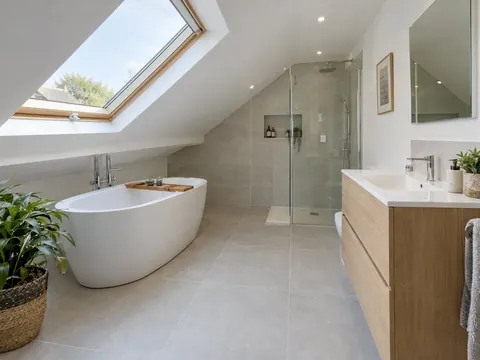
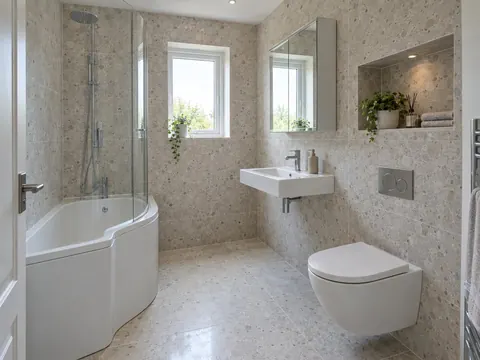
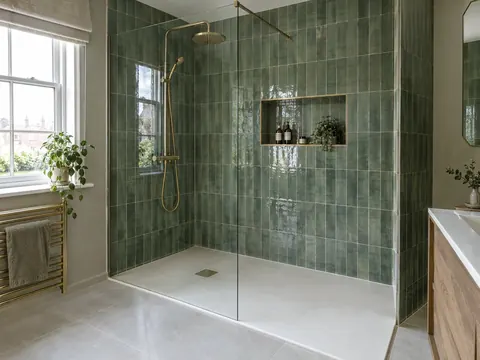
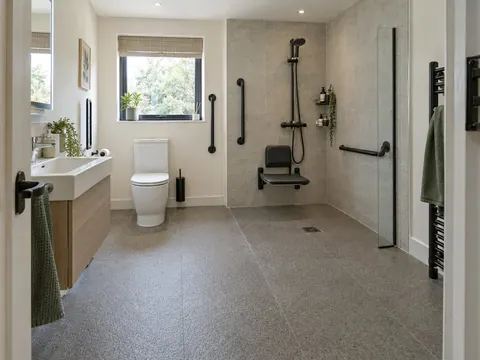
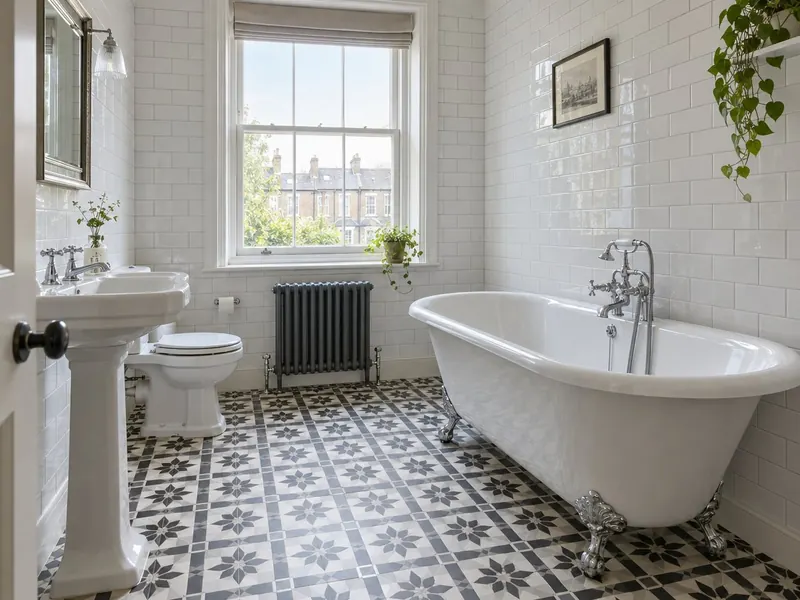
What does a bathroom renovation cost in Stockport?
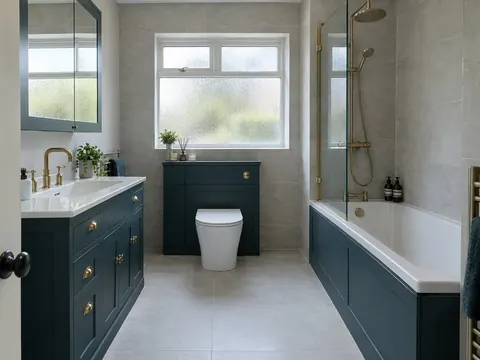
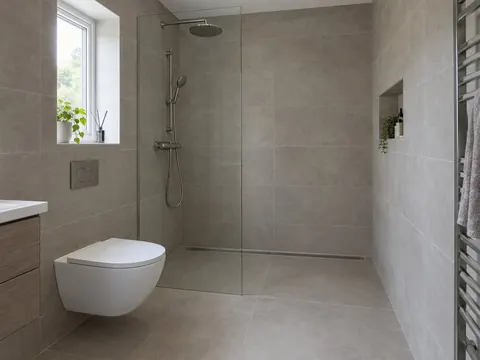
Our guide price for a bathroom renovation in Stockport is £7,000–£14,000 including VAT. We adjust the national guide for North West England, where prices are typically about 6% below the UK average. The figure depends on the size of the room, whether anything moves, and the products you pick.
Refresh
- Re-tile and re-floor
Full renovation
- New layout options
Structural
- Walls moved or rooms combined
Guide prices for Stockport including VAT. Your itemised written quote after the free survey is the price that counts.
Working in Stockport
In Stockport we cover SK1, SK2, SK3 and 4 more postcode districts; we also cover Bredbury, 1.8 miles away, and Hazel Grove.
Across a large town like Stockport, homes range from older terraces to newer estates; the survey tells us which pipework and floor we are dealing with. If your Stockport home is older and the bathroom still has original pipework or plaster behind the tiles, the survey shows whether a renovation or a refit makes more sense. For listed and period properties in Stockport, we check early whether listed building consent applies to the work you have in mind.
Most of Greater Manchester is supplied with soft water. That leaves you free to choose matt black, brushed brass or clear glass without worrying much about limescale. Hardness varies street by street, so check the figure for your postcode with your water supplier.
What the job includes
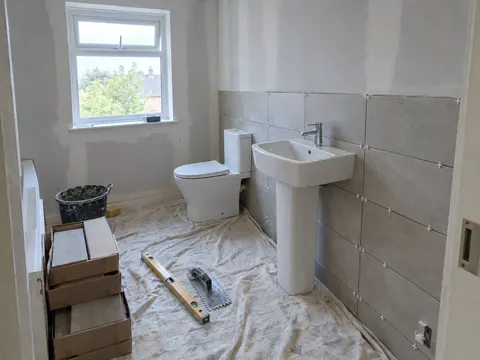
- Re-plastering or boarding, with cement-based boards and tanking in the wet areas
- A survey of the structure and services: joists, walls, ceilings, pipework, wastes, wiring and ventilation
- New wiring, lighting, extractor fan and RCD protection, installed and certified by a qualified electrician
- Tiling, fitting of the suite and furniture, making good and decorating, then handover
Decisions to make first
Plaster or boards
Plaster suits dry walls that will be painted. Cement-based tile backer boards are the better base behind showers and under heavy tiles.
Pipe material
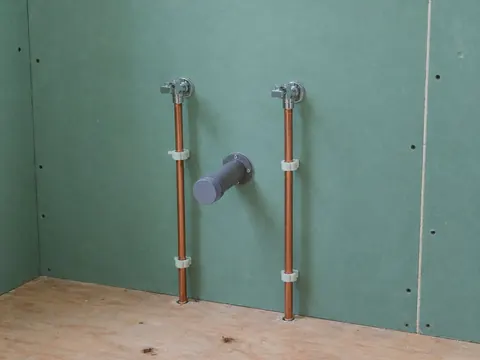
Copper suits exposed runs and the area near the boiler. Plastic pipe is quicker under floors and inside walls, and long runs need fewer joints.
Rules that apply in England
In England, structural changes, new drainage or a new connection to the soil stack under Part H, and new circuits under Part P can all be building regulations work. A registered electrician can self-certify the electrics; structural and drainage work may need a building notice or a full plans application to building control.