- Postcode districts
- RG12
- Nearby
- Ascot, Crowthorne and Wokingham
- Guide price
- £50–£100 per m²
- Typical time on site
- 2–4 working days
- Water
- Hard across most of Berkshire
- Survey
- Free, at your home
What does bathroom tiling cost in Bracknell?
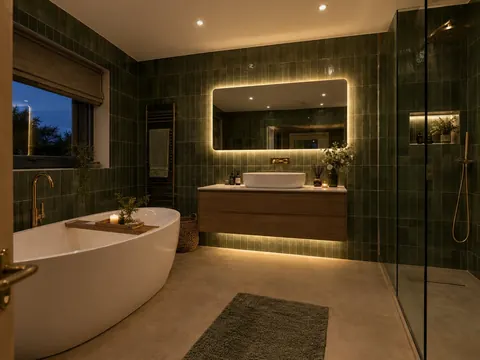
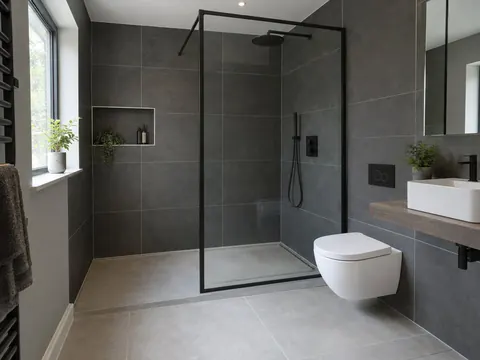
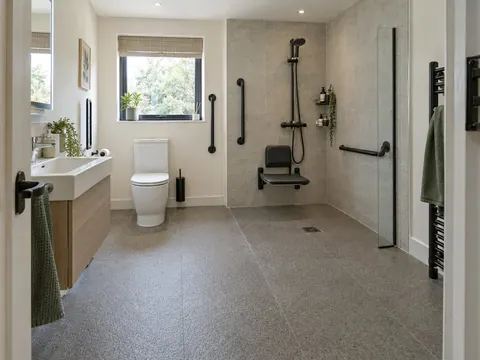
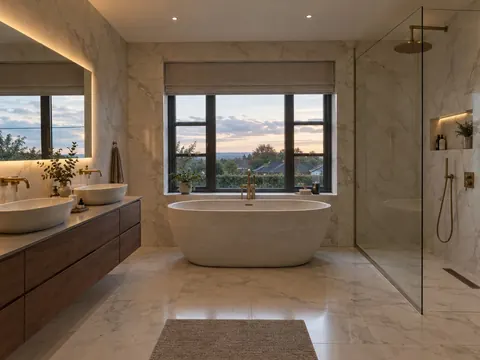
Our guide price for bathroom tiling in Bracknell is £50–£100 per m² including VAT. Labour costs in South East England put local prices at about 12% above the UK guide figure. The figure depends on the size of the room, whether anything moves, and the products you pick.
Ceramic
- Grout and trims
Porcelain
- Porcelain walls and floor
Large-format or stone
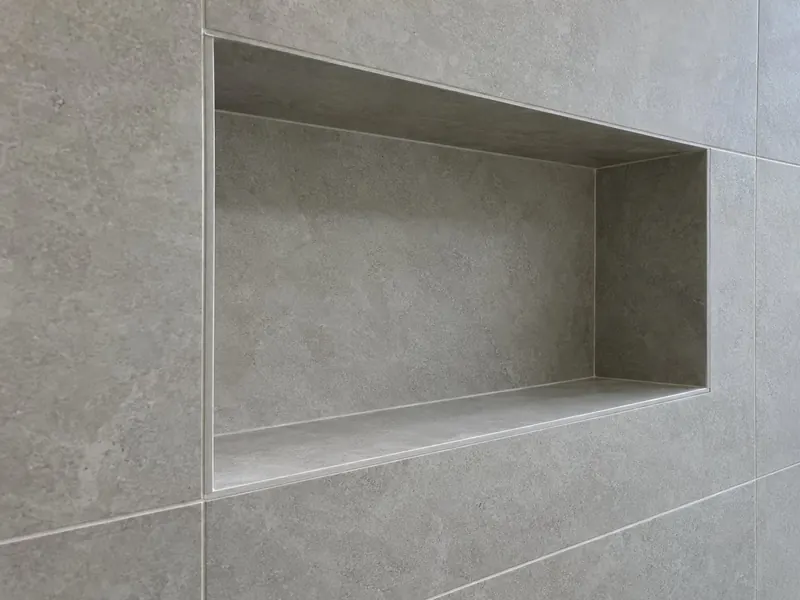
- Mitred edges, niches
Guide prices for Bracknell including VAT. Your itemised written quote after the free survey is the price that counts.
Working in Bracknell
In Bracknell we cover RG12; we also cover Ascot, 3.3 miles away, and Crowthorne.
Across a large town like Bracknell, homes range from older terraces to newer estates; the survey tells us which pipework and floor we are dealing with. Tiling quotes in Bracknell list the tile, the area and the preparation separately, so you can compare like for like. If your Bracknell home has hard water, larger tiles and epoxy grout leave fewer joints for limescale to build up in.
Water across much of Berkshire is hard. Hard water leaves white marks on dark grout and gloss tiles, so matt finishes and stain-resistant grout are the practical choice. Hardness varies street by street, so check the figure for your postcode with your water supplier.
What the job includes
- Floor preparation: overlaying timber floors with ply or backer board, or levelling a screed
- Checking walls for flatness and strength, and boarding with cement-based backer board where needed
- Sealing natural stone and cleaning off grout haze before handover
- Setting out so cuts are even and joints line up with niches, windows and edges
Decisions to make first
Natural stone
Marble, limestone and travertine need sealing and gentle cleaners, and can mark. Stone-effect porcelain gives a similar look without the upkeep.
Ceramic or porcelain
Ceramic is lighter, easier to cut and cheaper, and is fine on walls. Porcelain is denser and absorbs less water, so it suits floors and showers.
Rules that apply in England
In England, tiling itself is not building regulations work. If it is part of forming a level shower floor with new drainage, that drainage can be Part H work, and any new electrics are covered by Part P.