- Postcode districts
- WA7, WA8
- Nearby
- Widnes, Halewood and Speke
- Guide price
- £40–£85 per m²
- Typical time on site
- 2–4 working days
- Water
- Moderately hard across most of Cheshire
- Survey
- Free, at your home
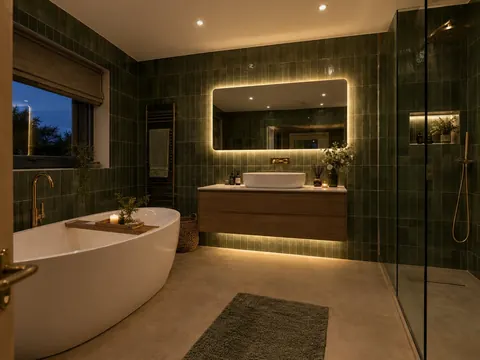
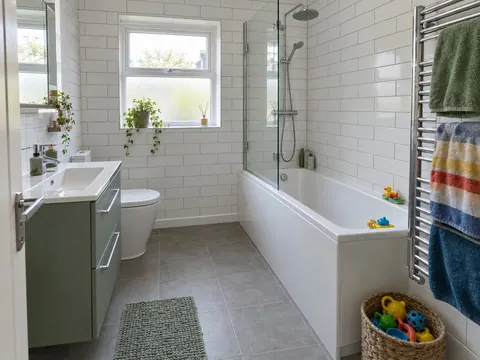
What does bathroom tiling cost in Runcorn?
In Runcorn, bathroom tiling typically costs £40–£85 per m² including VAT, based on North West England prices. Prices in North West England run at about 6% below the national guide, mainly because of labour rates. The figure depends on the size of the room, whether anything moves, and the products you pick.
Ceramic
- Wet areas or half height
Porcelain
- Levelling system for large tiles
Large-format or stone
- Large-format porcelain or natural stone
Guide prices for Runcorn including VAT. Your itemised written quote after the free survey is the price that counts.
Working in Runcorn
We work right across Runcorn — WA7 and WA8 — and in neighbouring Widnes and Halewood.
Homes in and around Runcorn vary, so we look at the floor, the walls and the water system before we price anything. For Runcorn flats, we check the lease and the floor build-up before laying hard tiles on a timber floor. We measure tiled areas in Runcorn bathrooms on site, so the quote is based on real square metres.
Supplies across most of Cheshire are moderately hard. Mid-tone grout and matt tiles hide the odd water mark better than dark grout and high gloss. Hardness varies street by street, so check the figure for your postcode with your water supplier.
What the job includes
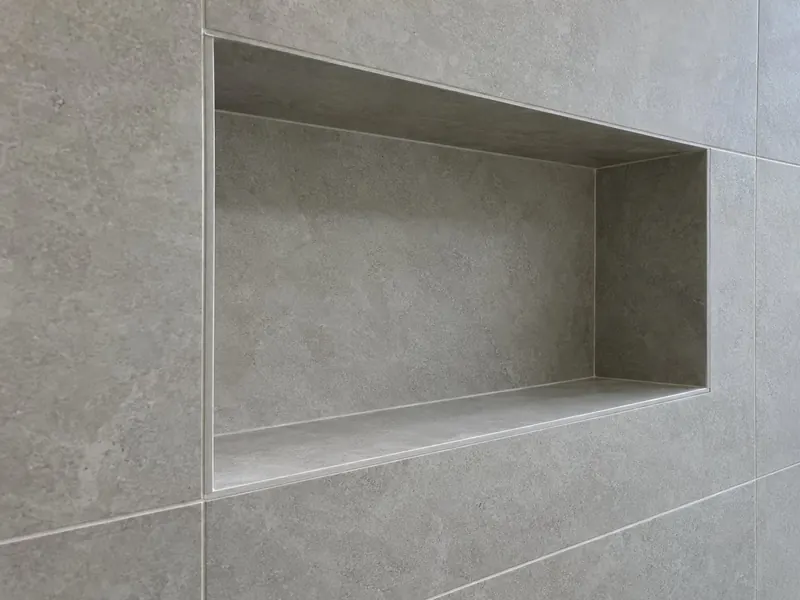
- Setting out so cuts are even and joints line up with niches, windows and edges
- Measuring wall and floor areas and working out quantities with an allowance for cuts
- Floor preparation: overlaying timber floors with ply or backer board, or levelling a screed
- Grouting, trims or mitred edges, and silicone at internal corners, the bath and the tray
Decisions to make first
Edges
Metal or PVC trims are quick and protect tile edges. Mitred edges look cleaner on porcelain and take more labour.
Ceramic or porcelain
Ceramic is lighter, easier to cut and cheaper, and is fine on walls. Porcelain is denser and absorbs less water, so it suits floors and showers.
Rules that apply in England
In England, tiling itself is not building regulations work. If it is part of forming a level shower floor with new drainage, that drainage can be Part H work, and any new electrics are covered by Part P.