- Postcode districts
- G84
- Nearby
- Greenock, Vale of Leven and Dumbarton
- Guide price
- £240–£600
- Typical time on site
- half a day
- Water
- Soft across most of Argyll and Bute
- Survey
- Free, at your home
What does a bathroom extractor fan cost in Helensburgh?
In Helensburgh, a bathroom extractor fan typically costs £240–£600 including VAT, based on Scotland prices. Labour costs in Scotland put local prices at about 4% below the UK guide figure. Travel and delivery to islands and remote areas are priced on your quote. The figure depends on the size of the room, whether anything moves, and the products you pick.
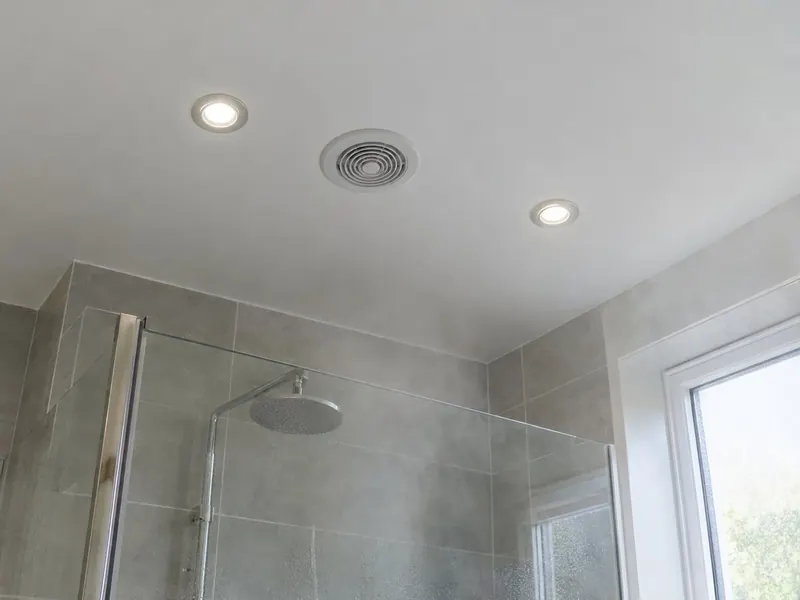
Extractor fan
- Fan with timer or humidistat
Inline fan
- Ducting to a roof or soffit vent
Continuous extract
- Good for windowless rooms
Guide prices for Helensburgh including VAT. Your itemised written quote after the free survey is the price that counts.
Working in Helensburgh
In Helensburgh we cover G84; we also cover Greenock, 4.2 miles away, and Vale of Leven.
Being a smaller town does not change how we work in Helensburgh: free survey, written quote, one team. If your Helensburgh bathroom has black mould on the ceiling or silicone, the fan and its duct are the first things we check. In Helensburgh flats, a new vent through an outside wall may need agreement from the other owners or the factor, so we raise it at the survey.
Most of Argyll and Bute is supplied with soft water. Even so, condensation is the bigger problem in any bathroom, and a properly sized extractor is what deals with it. Hardness varies street by street, so check the figure for your postcode with your water supplier.
What the job includes
- Rigid or semi-rigid ducting kept short and straight, and insulated where it crosses a cold loft
- Wiring by a qualified electrician, with an isolator outside the room and RCD protection
- A fan chosen to meet the bathroom extract rate: 15 l/s intermittent or 8 l/s continuous
- A backdraught shutter and external grille, so cold air does not blow back in
Decisions to make first
Intermittent or continuous
An intermittent fan runs during and after use. A continuous fan runs quietly all the time at a low rate and boosts when humidity rises.
Noise
Compare the stated noise level in decibels. Inline fans and low-speed continuous fans are much quieter in the room than budget axial fans.
Rules that apply in Scotland
In Scotland, the Technical Handbook also uses 15 l/s extract for a bathroom. A replacement fan rarely needs a building warrant, but forming a new bathroom may.