
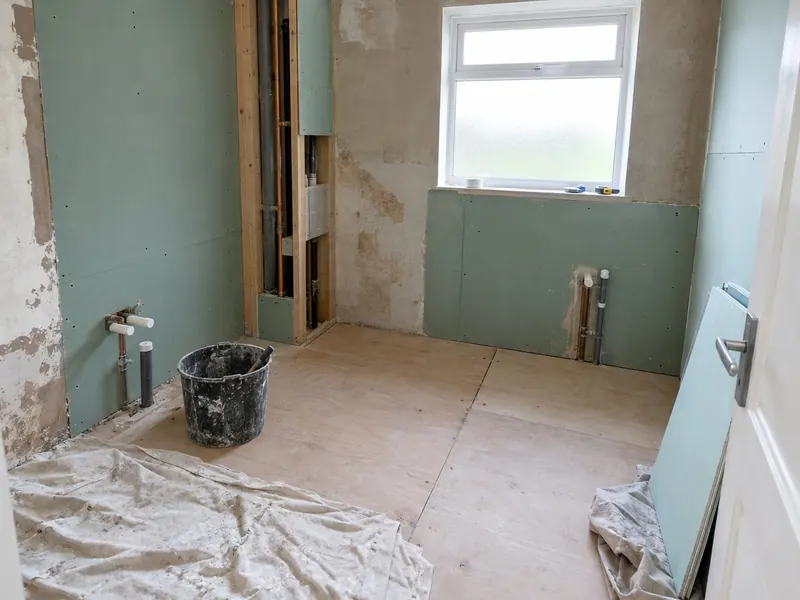
What does a bathroom strip-out cost on the Isle of Wight?
Our guide range on the Isle of Wight is £650–£2,000 including VAT. Prices on the Isle of Wight run at about 12% above the UK guide, based on South East England labour rates. Travel and delivery to islands and remote areas are priced on your quote.
Strip-out only
- Suite, tiles and fittings removed
Strip-out and prep
- Floor checked and overlaid
Back to brick
- Room ready for a full renovation
Guide prices for Isle of Wight including VAT. Your itemised written quote after the free survey is the price that counts.
Which towns do we cover on the Isle of Wight?
Supplies across most of the Isle of Wight are hard. Hard water leaves white marks on dark grout and gloss tiles, so matt finishes and stain-resistant grout are the practical choice. Hardness varies street by street, so check the figure for your postcode with your water supplier. Landlords in Newport can book a strip-out to see the real condition of a damaged bathroom before choosing between a refit and a renovation.
What the job includes
- Waste loaded and taken away by a licensed waste carrier
- Lights, fan, shaver socket and heated rail disconnected and made safe by a qualified electrician where needed
- Wall and floor tiles taken off with as little damage as possible to sound plaster
- The soil pipe sealed against smells once the WC is off
- Dust sheets and floor protection on the route out through the house
- Removal of the bath or shower tray, enclosure, basin, WC, furniture and accessories
Decisions to make first
Keep or lose the plaster
Tiles often come off leaving plaster that can be tiled again. If the plaster comes away with them, the wall is boarded or re-plastered.
The floor
Old vinyl or tiles on a ply overlay can come up with the ply. Tiles bonded to a screed may need grinding back or overlaying instead.
Salvage
If you want to keep a cast-iron bath, a radiator or a piece of furniture, say so before we start, so it comes out whole rather than in pieces.
Timing
Strip out just before the fit rather than weeks ahead, so the house is without a bathroom for as short a time as possible.
Rules that apply in England
Homes built before 2000 can contain asbestos in textured ceiling coatings, old floor tiles, cistern lids and boxing panels, so suspect materials should be tested before strip-out if there is any doubt. Bathroom waste should be taken away by a licensed waste carrier. Disconnecting electrical items should leave every circuit safe and is a job for a qualified electrician, and any work near a boiler or gas pipe is for a Gas Safe registered engineer.
In England, stripping out a bathroom does not need planning permission or building regulations approval in itself. Building regulations come in with what follows, such as new drainage under Part H or new circuits under Part P.