- Postcode districts
- PO33, PO34
- Nearby
- Sandown, Newport and Cowes
- Guide price
- £800–£2,800
- Typical time on site
- 1–2 working days (added to a fit)
- Water
- Hard across most of the Isle of Wight
- Survey
- Free, dates by arrangement
What does bathroom underfloor heating cost in Ryde?
In Ryde, bathroom underfloor heating typically costs £800–£2,800 including VAT, based on South East England prices. Labour costs in South East England put local prices at about 12% above the UK guide figure. Travel and delivery to islands and remote areas are priced on your quote. The figure depends on the size of the room, whether anything moves, and the products you pick.
Electric mat
- Mat under the tiles
Electric, larger room
- Programmable smart thermostat
Wet system
- Screed or low-profile boards
Guide prices for Ryde including VAT. Your itemised written quote after the free survey is the price that counts.
Working in Ryde
As well as Ryde itself (PO33 and PO34), we survey in Sandown, Newport and Cowes. Because Ryde is further afield, we arrange survey visits in batches; tell us your timescale and we will confirm a date before you commit to anything.
Ryde gets the same process as anywhere else: a free survey at your home and a written, itemised quote. We check door thresholds in Ryde homes at the survey, because underfloor heating and new tiles raise the floor slightly. For Ryde homes having the bathroom floor replaced, underfloor heating adds one to two days to the fit.
Water across much of the Isle of Wight is hard. Hard water leaves white marks on dark grout and gloss tiles, so matt finishes and stain-resistant grout are the practical choice. Hardness varies street by street, so check the figure for your postcode with your water supplier.
What the job includes
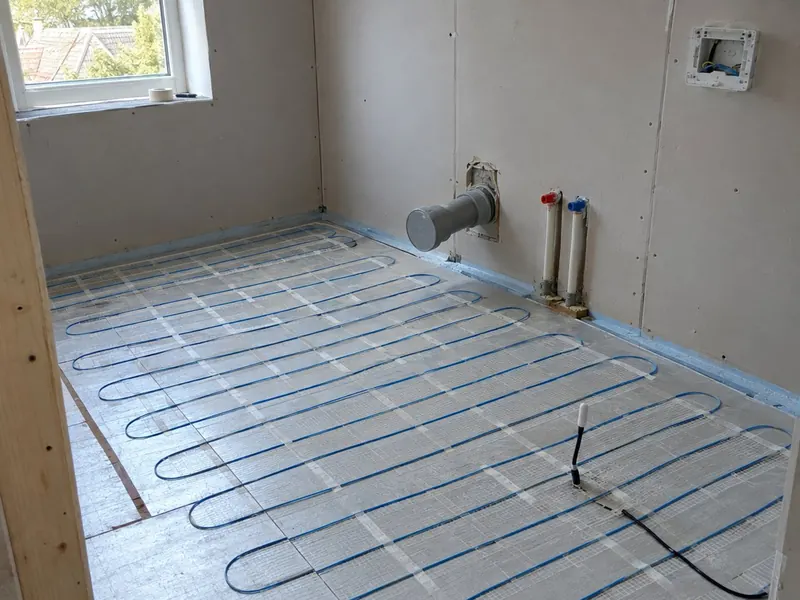
- The electric mat or cable laid to the open floor, kept clear of where the WC, bath and fixed furniture will sit
- Resistance and insulation tests on the mat before, during and after tiling, with the readings recorded
- A floor sensor set between the heating runs and wired back to the thermostat
- Insulation boards over the subfloor, so heat goes up into the tiles rather than down into the joists or screed
Decisions to make first
Insulation board thickness
Thicker boards warm up faster and lose less heat downwards, but raise the floor; the right choice depends on the door threshold and the next room.
Floor finish
Tiles and stone pass heat through well. LVT and vinyl can work, but check the maximum floor temperature the flooring maker allows.
Rules that apply in England
In England, a new circuit for underfloor heating is notifiable under Part P, and so is connecting it to an existing circuit in a room with a bath or shower. The electrician either self-certifies through a competent person scheme or the work is notified to building control.