- Postcode districts
- WA11, WA12, WN4
- Nearby
- Haydock, Golborne and Newton-le-Willows
- Guide price
- £7,000–£14,000
- Typical time on site
- 8–15 working days
- Water
- Soft across most of Greater Manchester
- Survey
- Free, at your home
What does a bathroom renovation cost in Ashton in Makerfield?
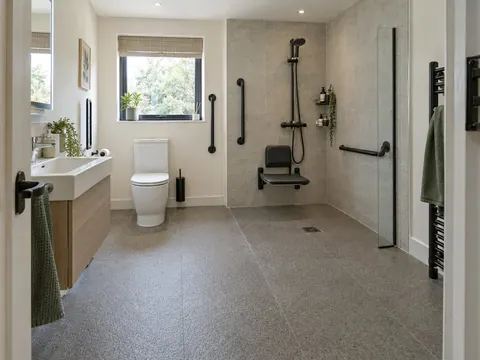
Our guide price for a bathroom renovation in Ashton in Makerfield is £7,000–£14,000 including VAT. Prices in North West England run at about 6% below the national guide, mainly because of labour rates. The figure depends on the size of the room, whether anything moves, and the products you pick.
Refresh
- Same layout, new suite
Full renovation
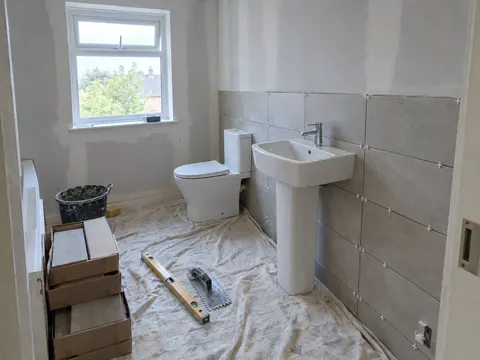
- Re-plaster, new pipework and electrics
Structural
- Ventilation and lighting redesigned
Guide prices for Ashton in Makerfield including VAT. Your itemised written quote after the free survey is the price that counts.
Working in Ashton in Makerfield
We cover every part of Ashton in Makerfield, including WA11, WA12 and WN4, and nearby Haydock (1.7 miles) and Golborne (2.2 miles).
In Ashton in Makerfield, as anywhere, the age of the house decides a lot: pipe sizes, floor construction and where the soil stack runs. For listed and period properties in Ashton in Makerfield, we check early whether listed building consent applies to the work you have in mind. A renovation survey in Ashton in Makerfield looks behind the surfaces, at joists, pipework and wiring, before any figure is put on paper.
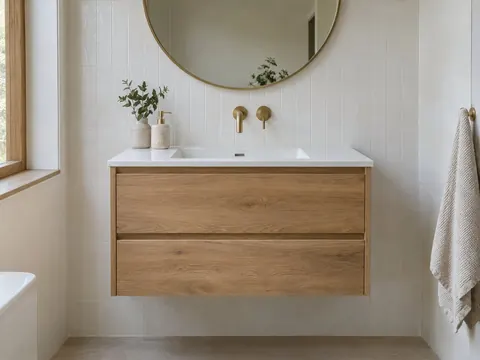
Supplies across most of Greater Manchester are soft. That leaves you free to choose matt black, brushed brass or clear glass without worrying much about limescale. Hardness varies street by street, so check the figure for your postcode with your water supplier.
What the job includes
- Tiling, fitting of the suite and furniture, making good and decorating, then handover
- Layout changes such as moved doors, new stud walls or boxing for concealed cisterns
- New hot and cold pipework and wastes, with isolation valves to each fitting
- A survey of the structure and services: joists, walls, ceilings, pipework, wastes, wiring and ventilation
Decisions to make first
Plaster or boards
Plaster suits dry walls that will be painted. Cement-based tile backer boards are the better base behind showers and under heavy tiles.
Pipe material
Copper suits exposed runs and the area near the boiler. Plastic pipe is quicker under floors and inside walls, and long runs need fewer joints.
Rules that apply in England
In England, structural changes, new drainage or a new connection to the soil stack under Part H, and new circuits under Part P can all be building regulations work. A registered electrician can self-certify the electrics; structural and drainage work may need a building notice or a full plans application to building control.