- Postcode districts
- L34, L35, L36
- Nearby
- Huyton, St Helens and Halewood
- Guide price
- £235–£550
- Typical time on site
- half a day
- Water
- Soft across most of Merseyside
- Survey
- Free, at your home
What does a bathroom extractor fan cost in Prescot?
In Prescot, a bathroom extractor fan typically costs £235–£550 including VAT, based on North West England prices. Labour costs in North West England put local prices at about 6% below the UK guide figure. The figure depends on the size of the room, whether anything moves, and the products you pick.
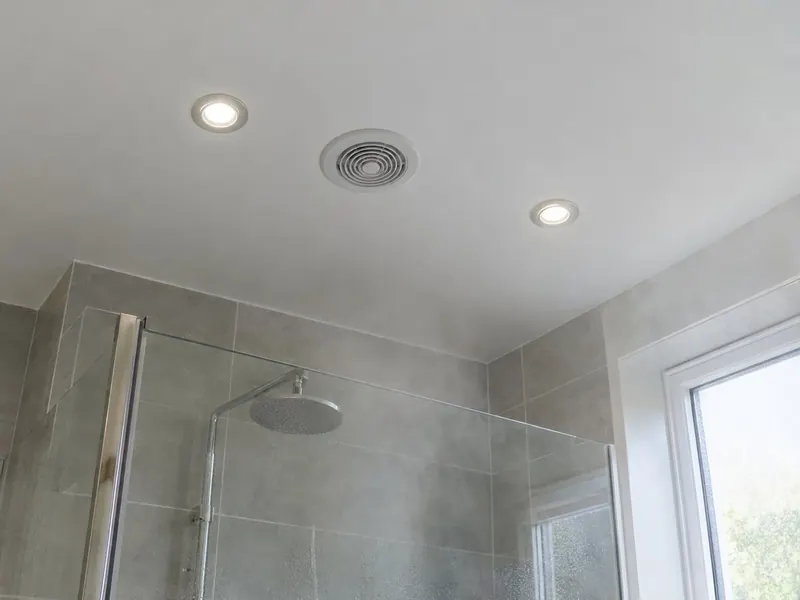
Extractor fan
- Fan with timer or humidistat
Inline fan
- Ducting to a roof or soffit vent
Continuous extract
- Good for windowless rooms
Guide prices for Prescot including VAT. Your itemised written quote after the free survey is the price that counts.
Working in Prescot
As well as Prescot itself (L34, L35 and L36), we survey in Huyton, St Helens and Halewood.
In Prescot, as anywhere, the age of the house decides a lot: pipe sizes, floor construction and where the soil stack runs. For windowless bathrooms in Prescot homes, continuous extract that boosts on humidity often works better than a fan tied to the light switch. We check the duct route at Prescot surveys, because a short, straight run to outside matters more than the fan's headline figure.
Supplies across most of Merseyside are soft. Even so, condensation is the bigger problem in any bathroom, and a properly sized extractor is what deals with it. Hardness varies street by street, so check the figure for your postcode with your water supplier.
What the job includes
- A fan chosen to meet the bathroom extract rate: 15 l/s intermittent or 8 l/s continuous
- A check of the room, any existing fan or vent, and the shortest route to the outside
- Wiring by a qualified electrician, with an isolator outside the room and RCD protection
- Rigid or semi-rigid ducting kept short and straight, and insulated where it crosses a cold loft
Decisions to make first
Intermittent or continuous
An intermittent fan runs during and after use. A continuous fan runs quietly all the time at a low rate and boosts when humidity rises.
Axial, centrifugal or inline
Axial fans suit short, straight runs; centrifugal fans cope better with longer ducts; inline fans sit in the loft and are the quietest in the room.
Rules that apply in England
In England, Approved Document F sets bathroom extract at 15 l/s for an intermittent fan or 8 l/s for continuous extract. Wiring a new fan alters a circuit in a room with a bath or shower, so it is notifiable under Part P.