
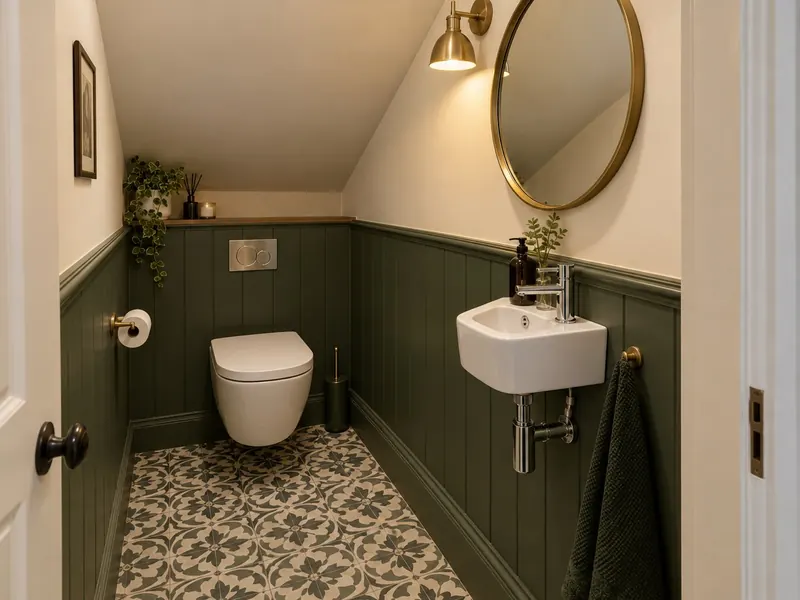
What does a cloakroom or downstairs WC cost in North Yorkshire?
Our guide range in North Yorkshire is £1,650–£4,200 including VAT. Prices in North Yorkshire run at about 7% below the UK guide, based on Yorkshire and the Humber labour rates.
Refit
- Splashback tiling, new floor
Upgrade
- Wall-hung WC with concealed frame
New cloakroom
- New waste or macerator
Guide prices for North Yorkshire including VAT. Your itemised written quote after the free survey is the price that counts.
Which towns do we cover in North Yorkshire?
Supplies across most of North Yorkshire are moderately hard. Taps and wastes will need an occasional descale, and chrome or brushed finishes are easier to keep clean than polished brass. Hardness varies street by street, so check the figure for your postcode with your water supplier. If the only toilet in your York home is upstairs, a cloakroom under the stairs or in the utility can save a lot of trips.
What the job includes
- A concealed cistern frame or WC unit where the space allows
- A survey that checks the headroom under the stairs, the door swing and how the waste will reach the drain
- Splashback or feature tiling and a new floor, often LVT or porcelain
- An extractor fan ducted to outside, wired with an overrun timer or linked to the light
- Lighting wired by a qualified electrician, tested and certified
- A new waste connection to the soil stack or drain, or a macerator where the rules allow it
Decisions to make first
Basin
A corner basin fits the tightest rooms. A slim vanity basin with a cupboard underneath gives somewhere to keep spare toilet rolls and soap, and hides the trap.
Door
An outward-opening door is usually needed so it does not hit the WC. A sliding door suits a narrow hallway where an outward door would block the way.
Finishes
A small room can carry a bolder tile or wallpaper. A feature wall behind the WC costs far less here than in a full bathroom because there is so little of it.
WC style
A wall-hung WC on a frame gives the most floor space and looks neat. A back-to-wall pan in a short furniture unit is easier to fit against an uneven wall.
Rules that apply in England
A cloakroom refit does not need planning permission, and forming a new one inside the house rarely does, although a listed building needs listed building consent for internal alterations affecting its character. A macerator or pumped WC is acceptable only where the home also has a WC on gravity drainage. The water fittings rules in each nation limit a new WC to a 6-litre flush.
In England, a new WC connected to the soil stack or drain is drainage work under Part H, and a newly formed cloakroom without an opening window should have mechanical extract; Approved Document F gives 6 litres per second as the design rate for a WC, against 15 for a bathroom. Because a cloakroom has no bath or shower, adding a light to an existing circuit is not notifiable under Part P, but a new circuit is.