- Postcode districts
- EX1, EX2, EX3, EX4
- Nearby
- Exmouth, Tiverton and Newton Abbot
- Guide price
- £700–£2,600
- Typical time on site
- 1–2 working days (added to a fit)
- Water
- Soft across most of Devon
- Survey
- Free, at your home
What does bathroom underfloor heating cost in Exeter?
As a guide, budget £700 to £2,600 including VAT for bathroom underfloor heating in Exeter; your written quote will pin it down. The figure depends on the size of the room, whether anything moves, and the products you pick.
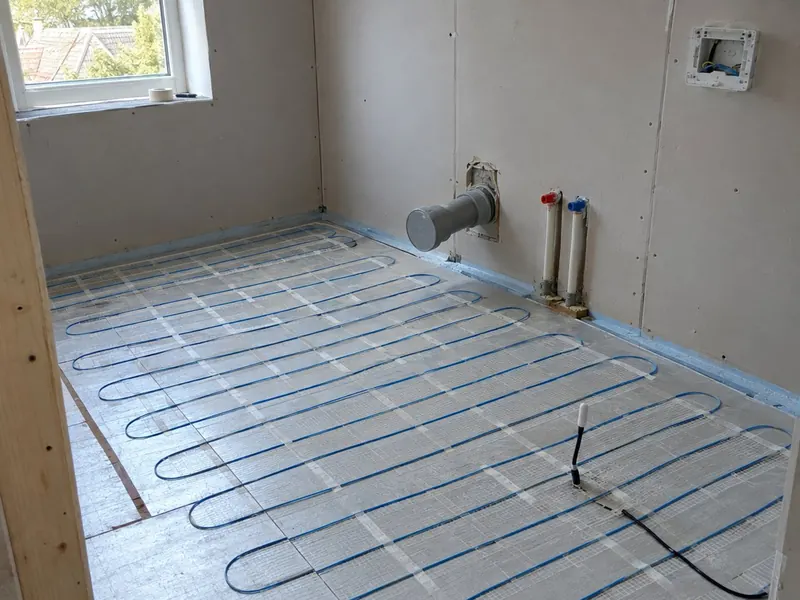
Electric mat
- Thermostat and RCD-protected supply
Electric, larger room
- Whole floor coverage
Wet system
- Manifold or single-zone kit
Guide prices for Exeter including VAT. Your itemised written quote after the free survey is the price that counts.
Working in Exeter
In Exeter we cover EX1, EX2, EX3 and 1 more postcode districts; we also cover Exmouth, 9.2 miles away, and Tiverton.
Exeter is a big place with every kind of home, from terraces to flats to new builds, so we never price from a photo alone. For Exeter homes having the bathroom floor replaced, underfloor heating adds one to two days to the fit. We check door thresholds in Exeter homes at the survey, because underfloor heating and new tiles raise the floor slightly.
Most of Devon is supplied with soft water. Soft water is kind to grout, so mid-tone and darker grouts stay looking fresh. Hardness varies street by street, so check the figure for your postcode with your water supplier.
What the job includes
- For wet systems, pipes in low-profile boards or screed connected to a manifold or single-zone kit, with any boiler work done by a Gas Safe registered engineer
- Resistance and insulation tests on the mat before, during and after tiling, with the readings recorded
- A check of the floor construction, the room's heat loss and where the thermostat and supply will go
- Insulation boards over the subfloor, so heat goes up into the tiles rather than down into the joists or screed
Decisions to make first
Electric or wet
Electric is cheaper to install and quick to lay in one room. Wet costs more upfront but is usually cheaper to run where it is fed by a gas boiler or heat pump.
Insulation board thickness
Thicker boards warm up faster and lose less heat downwards, but raise the floor; the right choice depends on the door threshold and the next room.
Rules that apply in England
In England, a new circuit for underfloor heating is notifiable under Part P, and so is connecting it to an existing circuit in a room with a bath or shower. The electrician either self-certifies through a competent person scheme or the work is notified to building control.