- Postcode districts
- E3, E14, E15
- Nearby
- Stratford, Canary Wharf and Canning Town
- Guide price
- £55–£110 per m²
- Typical time on site
- 2–4 working days
- Water
- Very hard across most of Greater London
- Survey
- Free, at your home
What does bathroom tiling cost in Bow?
In Bow, bathroom tiling typically costs £55–£110 per m² including VAT, based on London prices. Prices in London run at about 25% above the national guide, mainly because of labour rates. The figure depends on the size of the room, whether anything moves, and the products you pick.
Ceramic
- Standard ceramic wall tiles
Porcelain
- Full height in wet zones
Large-format or stone
- Sealing where needed
Guide prices for Bow including VAT. Your itemised written quote after the free survey is the price that counts.
Working in Bow
We cover every part of Bow, including E3, E14 and E15, and nearby Stratford (0.9 miles) and Canary Wharf (1.5 miles).
In Bow, many bathrooms are in flats or converted houses, so we check lease consents, access and the floor below before we price. If your Bow home has hard water, larger tiles and epoxy grout leave fewer joints for limescale to build up in. For Bow flats, we check the lease and the floor build-up before laying hard tiles on a timber floor.
Most of Greater London has very hard water. Hard water leaves white marks on dark grout and gloss tiles, so matt finishes and stain-resistant grout are the practical choice. Hardness varies street by street, so check the figure for your postcode with your water supplier.
What the job includes
- Fixing with an adhesive suited to the tile and the surface, with levelling clips for large tiles
- Tanking the shower area and the walls around the bath with a waterproof membrane or liquid system
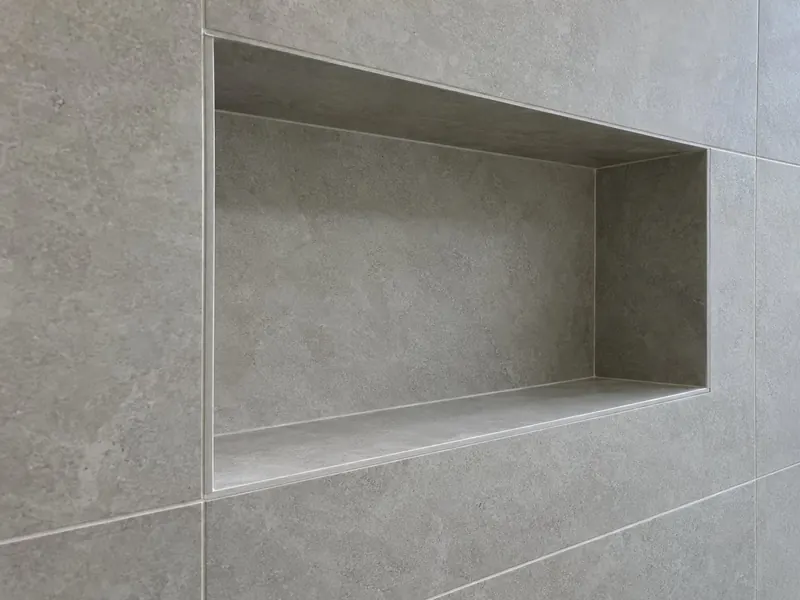
- Setting out so cuts are even and joints line up with niches, windows and edges
- Sealing natural stone and cleaning off grout haze before handover
Decisions to make first
Ceramic or porcelain
Ceramic is lighter, easier to cut and cheaper, and is fine on walls. Porcelain is denser and absorbs less water, so it suits floors and showers.
Tile size
Large-format tiles mean fewer grout lines but need flat walls and more preparation. Small tiles and mosaics follow uneven surfaces and grip better underfoot.
Rules that apply in England
In England, tiling itself is not building regulations work. If it is part of forming a level shower floor with new drainage, that drainage can be Part H work, and any new electrics are covered by Part P.