
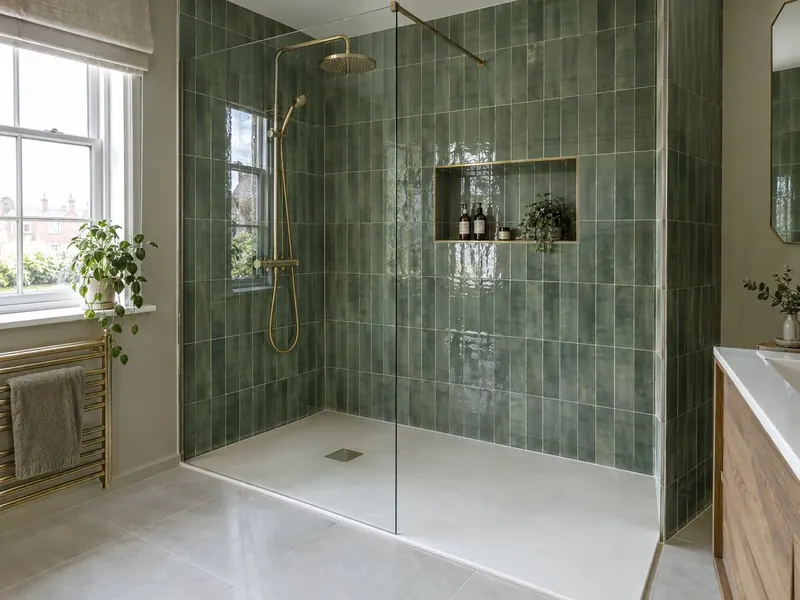
What is hard water and where in the UK is it hard?
Hard water is water with a high level of dissolved calcium and magnesium, picked up as rain filters through chalk and limestone; in the UK it is most common in the South East, the East of England, London and parts of the Midlands.
Where water runs off granite, slate and peat instead, it stays soft. That is why Scotland, Wales, Northern Ireland, the North West and the South West mostly have soft water, while the chalk and limestone areas of southern and eastern England have hard or very hard water.
Hardness can change from one town to the next, so the region is only a starting point. Your water supplier publishes the hardness for your postcode, usually in milligrams per litre of calcium carbonate or in degrees of hardness, with a description from soft to very hard. The signs are easy to spot too: a white crust on the kettle element, spots on glass after it dries and shower heads that clog within months.
Hard water is safe to drink. The problem is what it leaves behind when it is heated or dries, which is limescale.
What does hard water do to a bathroom?
Hard water leaves limescale, a chalky white deposit, wherever water dries or is heated, so in a bathroom it builds up on shower glass, taps, shower heads, the WC pan and inside valves and heaters.
- Glass screens: water spots dry into a cloudy film that gets harder to remove the longer it is left.
- Taps: scale blocks the aerator at the spout, so the flow becomes uneven or splashes.
- Shower heads: nozzles block, the spray turns patchy and the flow drops.
- Thermostatic valves: scale on the cartridge can make the temperature control stiff or unreliable over time.
- Electric showers: scale forms on the heating element and in the head.
- WCs: a ring forms under the rim and at the water line.
Limescale also gives grime something to cling to, so a bathroom in a hard-water area looks tired faster if it is not wiped down. None of this stops you having the bathroom you want. It means choosing fittings that are easy to wipe and easy to service, and building a quick clean into the routine.
Which bathroom fittings cope best with hard water?
The fittings that cope best with hard water have smooth, simple surfaces that are quick to wipe, shower heads with flexible nozzles you can rub clean, and valves that can be serviced without opening the wall.
- Shower heads: soft silicone nozzles let you rub scale off with a finger. Very large rainfall heads have more nozzles to block.
- Glass: frameless panels have fewer edges for scale to collect, and a factory-applied easy-clean coating helps water run off.
- Brassware finish: polished chrome is easy to wipe and tolerates most cleaners. Matt black, brushed and coloured finishes show water marks and often need gentler cleaning, so check the care instructions before you choose.
- Valves: a thermostatic valve with isolation valves and a cartridge you can reach makes descaling or replacement a short job. Concealed valves need an access route.
- WCs: rimless pans have no hidden rim for scale to build under.
- Tiles: limescale is white, so it shows most on dark, glossy tiles and dark grout. Lighter, satin-finish tiles hide marks between cleans.
Make these choices at the design stage, because changing a finish or valve type later costs more than choosing it first.
How should you clean limescale without damaging your bathroom?
The safest way to deal with limescale is to stop it building up: squeegee the glass and wipe taps dry after use, then clean regularly with a mild descaler suited to the surface, never an abrasive pad.
- Daily: a squeegee down the shower glass and walls takes seconds and removes most of the water before it dries into spots.
- Weekly: a diluted white vinegar or citric acid solution, or a bathroom descaler, on chrome, glass and the shower head, then rinse and dry.
- Monthly: unscrew and soak the shower head and tap aerators, and rub the nozzles clean.
Some surfaces need more care. Acids etch marble, limestone and travertine, so use a pH-neutral stone cleaner on natural stone. Coloured, brushed and matt brassware can be marked by strong descalers, so follow the maker's instructions. Avoid scouring pads and powders on chrome, acrylic baths and trays, and coated glass, because scratches hold more scale next time.
Rinse acid cleaners off silicone and grout rather than leaving them to soak. If a shower head or cartridge is heavily scaled, replacing the part is often quicker than trying to dissolve it.
Does hard water affect showers and hot water systems?
Yes. Hard water scales up anything that heats water, so electric showers, combi boilers and hot water cylinders all lose efficiency and flow if scale is left to build up.
An electric shower heats cold mains water as it passes the element, which is exactly where scale forms. Clean the head regularly and check the inlet filter if the flow drops. If an old electric shower is struggling, a like-for-like shower replacement is often the simplest fix; our guide price for a shower swap is £450–£1,000.
In a mixer shower, scale can stiffen the thermostatic cartridge, and servicing or replacing it keeps the temperature control working as it should. Scale in a combi boiler's heat exchanger or a cylinder's coil reduces the hot water it can deliver, which is why heating engineers in hard-water areas often fit a scale reducer on the boiler's water supply. Any work on the boiler itself is done by a Gas Safe registered engineer.
If you are choosing a new shower, our shower guide explains how each type works with your water system.
Should you fit a water softener with a new bathroom?
A water softener is worth considering if you live in a hard or very hard water area and want less limescale across the house, but it must be fitted so that you keep at least one tap with unsoftened water for drinking, normally the kitchen cold tap.
Most home softeners use ion exchange: the water passes through resin that swaps calcium and magnesium for sodium. Softened water is fine for washing and bathing, but it contains more sodium, so the guidance is to keep an unsoftened tap for drinking and for making up baby formula.
A softener is fitted on the incoming main and needs:
- Space, usually under the kitchen sink, in a utility or in a garage
- A drain for the regeneration water and, for most models, a power supply
- Backflow protection to meet the water fittings rules where you live
- A bypass valve so it can be serviced
- Regular salt top-ups
A softener is a separate decision from the bathroom itself. If you are planning one, mention it at the survey so the pipework can be arranged around it.
Questions about this guide
How do I find out if my water is hard?
Check your water supplier's website, which shows hardness by postcode. Limescale on the kettle, spots on glass and blocked shower heads are also clear signs.
Does hard water damage shower screens?
It does not harm the glass straight away, but limescale left for months can leave a cloudy film that may not come off completely. A squeegee after each shower and a coated glass panel make a big difference.
Can I drink water from a water softener?
Softened water contains extra sodium, so keep a separate tap with unsoftened water for drinking and for making up baby formula. This is normally the kitchen cold tap.
Are electric showers a bad idea in a hard-water area?
No, but they need more care. Clean the shower head and inlet filter regularly so scale does not restrict the flow or build up on the element. A mixer shower avoids an element altogether if your hot water system can supply one.
Guide prices include VAT and were reviewed in October 2026. Rules summarised here are general information, not legal advice; we check what applies to your home at the survey.
Add Fitted Bathrooms as a preferred source on Google