
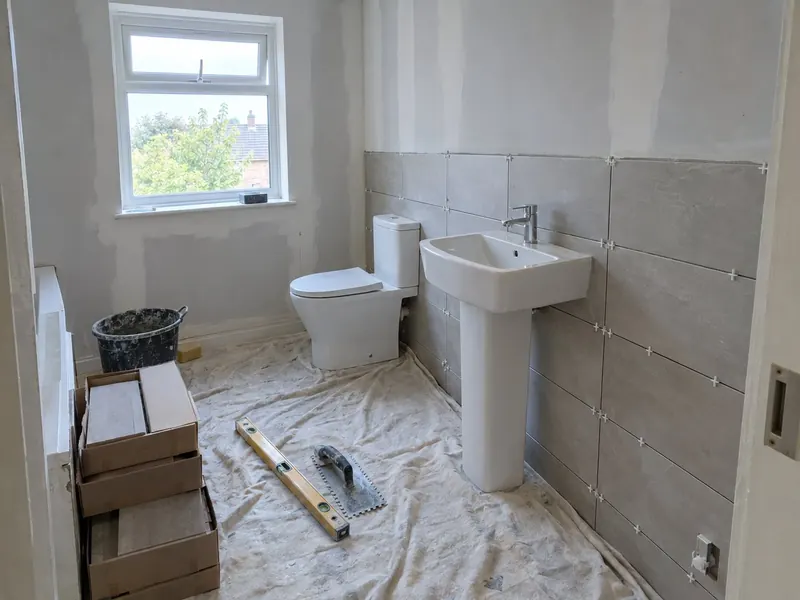
How long does it take to fit a bathroom?
A typical family bathroom takes 6–10 working days to fit from strip-out to handover, with like-for-like refits at the shorter end and new layouts, full-height tiling or wet-room floors at the longer end.
These are working days, so a 10-day job usually runs into a third week once weekends are counted. Most of the time goes on work you will not see in the finished room: pipework, cables, boards and waterproofing. Tiling is often the longest single stage.
- Layout: keeping the bath, WC and basin where they are is much quicker than moving them, because new waste runs and pipe routes take time.
- Tiling: tiling only the wet areas is far quicker than full-height walls and floor, and large-format or stone tiles take longer than standard ones.
- Extras: underfloor heating, a concealed cistern frame, new lighting or a niche all add hours.
The plan below is based on an eight-day refit of a medium bathroom. Once your order is placed, you get a start date and a day-by-day plan for your own room.
What happens on each day of a bathroom fit?
A bathroom fit follows the same order every time: strip-out, first fix, boarding and tanking, tiling, second fix, then snagging and handover.
- Day 1, strip-out: the old suite, tiles and fittings come out, water and power are made safe, and the waste is taken away.
- Day 2, first fix: new pipes, wastes, cables, the fan duct and any concealed cistern frame go in while the walls are open.
- Day 3, boarding and tanking: walls are boarded, the floor is overlaid, the bath or shower tray is set in place and the wet areas are tanked.
- Days 4–6, tiling: walls first, then the floor, then grout. Any underfloor heating goes down before the floor tiles.
- Day 7, second fix: the WC, basin, furniture, taps, shower, lights and fan are fitted and connected, and the electrician tests and certifies.
- Day 8, finishing: glass screens, silicone, accessories, a final test of every fitting, a clean and a walk-round with you.
Some stages overlap and some need drying time, so on a real job a trade may be on site for a short day while a product cures.
What happens during strip-out and first fix?
Strip-out removes everything down to the bare walls and floor, and first fix puts in the hidden pipework, wastes and cables before the walls are closed up again.
Strip-out usually takes a day, sometimes two if there are several layers of old tiles or a heavy cast-iron bath. Once the room is bare, the floor is checked for rot or soft boards and the walls for loose plaster or damp. This is when hidden problems show up, so it is also when any extra work is priced and agreed with you before it goes ahead.
In homes built before 2000, textured ceilings, old floor tiles, cistern parts and boxing panels can contain asbestos. If there is any doubt, it is tested before strip-out, not after.
First fix is where the layout becomes permanent. Pipes and wastes run to the new positions, cables for lights, the fan, a shaver socket or heating are pulled in, and cistern frames are fixed. Moving a WC means a new connection to the soil stack, the slowest part of first fix. See bathroom strip-out for what is removed and how the room is prepared.
Why do boarding and tanking take time?
Boarding and tanking take time because each layer has to be fixed and sealed, and tanking has to dry or cure before any tiles go on top.
Walls are lined with tile backer board or moisture-resistant board, or patched where the old plaster is sound. Timber floors are screwed down and overlaid with plywood or backer board so they do not flex. The bath and shower tray are fitted and levelled at this stage, so the tiles can finish neatly over their edges.
Tanking then goes over the shower area, around the bath and, in a wet room, across the whole floor. It is usually a liquid membrane applied in coats, with reinforcing tape in the corners and seals around pipes and drains. Each coat needs the drying time set by the product maker, and tiling cannot start until it is ready.
This is the stage not to rush. Tanking is what keeps water out of the walls and the ceiling below if grout ever cracks, and it cannot be put right later without taking the tiles off.
How long does bathroom tiling take?
Tiling a typical bathroom takes 2–4 working days, including the walls, floor and grouting, and it is often the longest single stage of the fit.
The time depends on the area and the number of cuts more than on the tile itself. A plain wall goes quickly; a wall with a window reveal, boxing, a niche and pipe entries takes much longer for the same area. Large-format tiles cover more ground per tile but need more preparation and two people to handle. Mosaic shower floors, herringbone patterns and mitred edges are slow, careful work.
Walls are tiled first so nothing drops onto a finished floor, then the floor is laid, and grout goes in once the adhesive has set. Underfloor heating is laid and tested before the floor tiles.
Choosing your tiles before the start date saves time. If they arrive late, or there are not enough from the same batch, the fit waits. The bathroom tiles guide explains how to work out quantities.
What happens at second fix and snagging?
Second fix is when the visible fittings go in and everything is connected; snagging is the final check that puts right any small faults before handover.
At second fix the WC, basin, vanity unit and furniture are fitted, the taps and shower are connected, and the electrician fits the lights, fan, switches and any shaver socket, then tests and certifies the work. Glass screens go on once the tiles are grouted. Joints between tiles and sanitaryware are sealed with silicone, which usually needs at least 24 hours to cure before the shower is used.
Snagging is a walk-round with you. Every tap, shower, flush and waste is run and checked for leaks, doors and drawers are adjusted, and any chipped tile, gap in the silicone or loose fitting is put right. You are shown how the shower, fan and heating controls work and where the isolation valves are.
Leave a few days before decorating the walls and ceiling, so the room can dry out after tiling and any plastering.
How long do different bathroom jobs take?
Smaller jobs are quicker: a bath replacement takes 1–2 working days and a cloakroom 2–4, while a luxury bathroom or full renovation can take two to three weeks.
| Job | Typical working days |
|---|---|
| Bath replacement | 1–2 |
| Walk-in shower | 2–5 |
| Bath to shower conversion | 2–6 |
| Cloakroom or downstairs WC | 2–4 |
| En-suite | 4–8 |
| Wet room | 5–10 |
| Family or fitted bathroom | 6–10 |
| Loft bathroom | 6–12 |
| Full renovation, back to brick | 8–15 |
| Luxury bathroom | 10–15 |
Wet rooms take longer than their size suggests because the floor is formed to a fall and tanked before tiling. Loft bathrooms often need new pipe and waste routes, and full renovations include plastering and drying time. A cloakroom refit is quick because there is little to tile, but forming a new one under the stairs adds waste and ventilation work. Our prices page shows what each job typically costs.
What can make a bathroom fit take longer?
The most common causes of delay are hidden problems found at strip-out, products missing or damaged on the start date, and approvals that are not in place.
- Hidden problems: rotten joists, old leaks or wiring that needs replacing. Extra work is priced and agreed with you before it goes ahead.
- Products: a wrong or damaged item can stop the job, so everything should be on site and checked before strip-out.
- Asbestos: suspected material is tested, and removed by specialists if needed, before work continues.
- Changes mid-job: moving a fitting after first fix means opening walls again.
- Approvals: forming a new bathroom or altering drainage may need building control sign-off or, in Scotland, a building warrant, and leaseholders may need the freeholder's consent first.
If this is your only bathroom, plan for the days without a working toilet or shower and talk it through at the survey. Fixing the layout and products before ordering, which is also when your price is fixed in writing, is what keeps the plan on track.
Questions about this guide
Can I use my bathroom while it is being fitted?
Not for most of the fit. The water to the bathroom is off for long stretches and the room is a building site from strip-out to second fix. If it is your only toilet, talk at the survey about keeping a working WC for as much of the job as possible.
How long after fitting can I use the shower?
Once the silicone has cured, which is usually at least 24 hours after it is applied. Your fitter will tell you when it is ready, based on the products used.
Do bathroom fitters work every day until the job is finished?
The plan normally runs on consecutive working days, but some days are shorter while tanking, adhesive or grout cures. Your day-by-day plan shows which trade is on site and when.
How long does a fit-only bathroom job take?
A fit-only job with the same layout typically takes 4–8 working days, because most refits still include strip-out, boarding and tiling. A straight swap of a WC and basin without retiling is much quicker.
Guide prices include VAT and were reviewed in October 2026. Rules summarised here are general information, not legal advice; we check what applies to your home at the survey.
Add Fitted Bathrooms as a preferred source on Google