- Postcode districts
- SE3, SE7, SE10, SE12
- Nearby
- Blackheath, Canary Wharf and Catford
- Guide price
- £550–£4,400
- Typical time on site
- half a day to 3 days
- Water
- Very hard across most of Greater London
- Survey
- Free, at your home
What does a new shower cost in Greenwich?
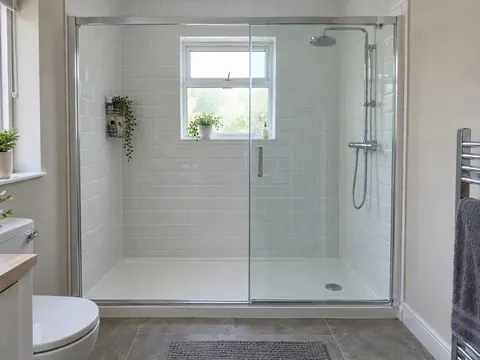
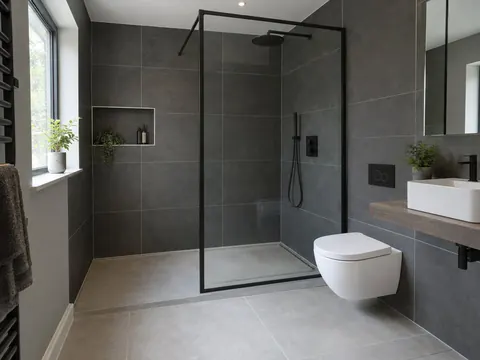
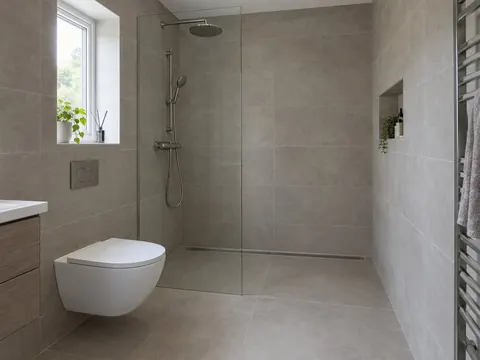
As a guide, budget £550 to £4,400 including VAT for a new shower in Greenwich; your written quote will pin it down. Labour costs in London put local prices at about 25% above the UK guide figure. The figure depends on the size of the room, whether anything moves, and the products you pick.
Shower swap
- Existing supply and position
New shower over bath
- Tiling the bath surround
New shower with enclosure
- Tray, enclosure and valve
Guide prices for Greenwich including VAT. Your itemised written quote after the free survey is the price that counts.
Working in Greenwich
We cover every part of Greenwich, including SE3, SE7, SE10 and 1 more postcode districts, and nearby Blackheath (1.2 miles) and Canary Wharf (1.9 miles).
In Greenwich, many bathrooms are in flats or converted houses, so we check lease consents, access and the floor below before we price. If the shower in your Greenwich home swings between hot and cold, a thermostatic valve is usually the fix. We test pressure and flow at Greenwich surveys before recommending a shower, so you know how it will perform before you buy.
Supplies across most of Greater London are very hard. If your supply in Greenwich is the same, limescale on shower glass and heads is a real issue: easy-clean glass, rub-clean nozzles and a squeegee make a big difference. Hardness varies street by street, so check the figure for your postcode with your water supplier.
What the job includes
- A check of your hot-water system, water pressure and flow rate
- Electrical connection by a qualified electrician, tested and certified
- Tiling or re-tiling around the shower, with tanking behind new tiles in the wet area
- Supply and fitting of the shower valve or unit, riser rail, handset or fixed head
Decisions to make first
Electric shower
Heats cold mains water as it flows, so it works without stored hot water. Higher kW units give more flow; 8.5 to 10.5 kW models need a dedicated circuit, often 40 to 45 amps.
Exposed or concealed
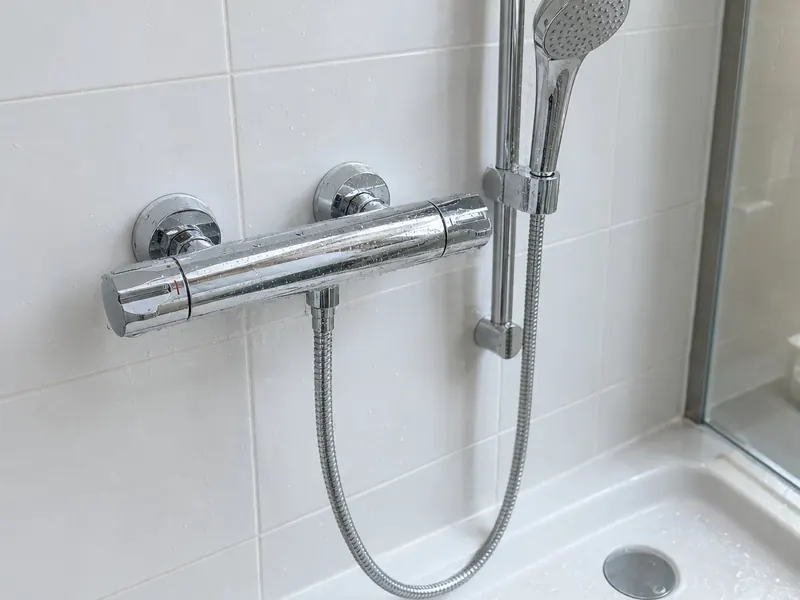
An exposed bar valve fixes onto the tiles and is easy to service. A concealed valve sits in the wall for a cleaner look but needs careful setting-out and a plan for access.
Rules that apply in England
In England, an electric shower usually needs its own dedicated circuit, often 40 to 45 amps for an 8.5 to 10.5 kW unit, and a new circuit is notifiable under Part P. The Part G limit of 48 °C applies to a new bath in a new dwelling or one created by change of use, not to a shower, but a thermostatic valve gives similar protection. An unvented cylinder fitted to improve the shower must be installed by a G3-qualified installer.