- Postcode districts
- PE15
- Nearby
- Wisbech, Ely and Peterborough
- Guide price
- £950–£2,600
- Typical time on site
- 1–2 working days
- Water
- Very hard across most of Cambridgeshire
- Survey
- Free, at your home
What does a replacement bath cost in March?
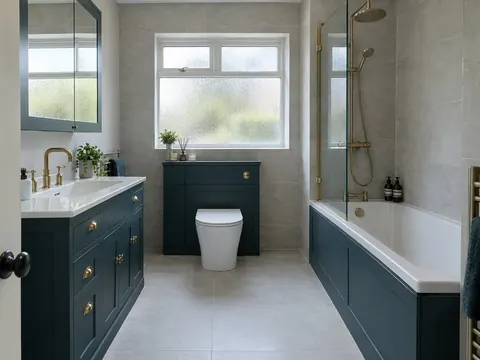
Our guide price for a replacement bath in March is £950–£2,600 including VAT. We adjust the national guide for East of England, where prices are typically about 6% above the UK average. The figure depends on the size of the room, whether anything moves, and the products you pick.
Like-for-like bath
- New acrylic or steel bath, panel and taps
Shower bath
- Re-tiling to the bath area
Freestanding bath
- Freestanding acrylic or stone resin
Guide prices for March including VAT. Your itemised written quote after the free survey is the price that counts.
Working in March
In March we cover PE15; we also cover Wisbech, 8.5 miles away, and Ely.
Being a smaller town does not change how we work in March: free survey, written quote, one team. If the bath in your March home is the only thing letting the bathroom down, a swap in one or two days avoids a full refit. Landlords with properties in March can usually have a bath replaced between tenancies in one to two working days.
Supplies across most of Cambridgeshire are very hard. Taps, plug wastes and toilet pans scale up quickly, so chrome copes better than matt black, and a removable aerator is worth having. Hardness varies street by street, so check the figure for your postcode with your water supplier.
What the job includes
- Filling the bath before sealing, so the silicone cures with the bath at its heaviest
- Levelling the bath on adjustable feet or a cradle, with timber battens fixed to the walls under the rim
- Removal of the old bath, including breaking up a cast-iron bath in place where it will not come out whole
- Tile repairs or re-tiling around the bath, and a fixed screen where there is a shower over it
Decisions to make first
Taps or filler
Deck taps on the rim are the simplest swap. Wall-mounted taps or a bath filler look cleaner but mean opening the wall, and an overflow filler hides the spout altogether.
Freestanding bath
Acrylic freestanding baths are manageable on most floors; stone resin and cast iron are much heavier when full. You need room to clean round the bath and a plan for where the waste and filler come up.
Rules that apply in England
In England, Part G limits the hot water to a new bath to 48 °C at the outlet, usually with a thermostatic mixing valve, but only in a new dwelling or one created by a change of use. It does not apply to a replacement bath in an existing home, though a thermostatic valve is still sensible where children or older people bathe. New wiring for a shower over the bath or new lights is notifiable under Part P.